
Physician-written guides on nexus letters and VA claims.
Dr. Jessica Allen breaks down the conditions, secondary theories, and evidence rules that decide real claims.

When Trauma Happens in Seconds: PTSD After Accidents You Survive or Witness
A carrier landing mishap aboard the USS Eisenhower is a reminder that accidents, not just combat, can cause PTSD. Learn the signs and how the VA reviews these claims.

Can Fibromyalgia Cause Depression? What the Evidence Actually Shows
Depression is the most common psychiatric condition found with fibromyalgia. Here is the evidence on direction and mechanism, the pyramiding problem, and how the VA connects and rates it.
PTSD Anger at Work: Is Your Condition Getting Worse?
Anger and irritability are rating criteria, not character flaws. How worsening irritability and impaired impulse control map onto the 50% and 70% levels.

Why the VA Combined My Bruxism With My Mental Health Rating
Bruxism has no VA diagnostic code, so it cannot be rated on its own. Why the VA folds it into your mental health diagnosis, why that is a concession rather than a denial, and what to file next.

PTSD rating increase nexus letters & emotional support animals
Owning an animal does not raise a rating. But why a veteran relies on one — and what happens when it is not there — can describe the social and occupational impairment the rating measures.

Why In-Service Car Accident PTSD Claims Get Denied
Most in-service motor vehicle accident PTSD claims fail for reasons that have nothing to do with whether the veteran has PTSD — line of duty findings, TBI confusion, passengers written off, and a later civilian crash.

Nexus Letters for Hypertension: What Veterans Need to Know
Presumptive, direct, and secondary pathways for hypertension claims — plus the aggravation theory C&P examiners most often miss.

What Your Sleep Study Numbers Mean for a VA Claim
AHI, RDI, ODI, SpO2 and the rest of your polysomnogram explained — and which of those numbers actually matter once the report becomes evidence in a VA sleep apnea claim.

The VA Blamed My Civilian Career for My PTSD: What to Do
Sole cause was never the standard. Why an examiner who points to your police, EMS, nursing, or firefighting career may be entitled to little weight — and how a rebuttal opinion answers it.

Buddy Letters for Sleep Apnea VA Claims: The Bunkmate Witness
Nobody hears their own snoring or witnesses their own apneas — but the service member in the next rack did. What a bunkmate buddy letter should say, plus sample language.

You Made It to the Exam. Nobody Asked How You Got There
Agoraphobia is defined by the places a veteran no longer goes — which is exactly what a single compensation exam cannot see. What the encounter misses, and how a psychiatric opinion documents it.

How to Read a VA Denial Letter — and What “No Nexus” Really Means
Your denial letter is written in code. A line-by-line translation of a sleep apnea secondary to PTSD denial — what “less likely than not,” “proximately due to,” and “limited probative value” actually mean.

What counts as military sexual trauma? VA's definition
The VA's definition is broader than rape. It covers coercion, unwanted touching, threatening comments, and contact while asleep or intoxicated — and it does not require that you reported it.

VA Denied Your Mental Health Claim Because of a Personality Disorder?
A personality disorder diagnosis narrows what the VA will compensate — it does not automatically end the claim. What 38 C.F.R. § 4.127 actually says, and how a rebuttal opinion answers the denial.

Urinary Frequency From Blood Pressure Medication: VA Claims
Diuretics and other blood pressure medications are a common — and overlooked — cause of compensable urinary frequency. How to file it under § 3.310 and get it rated under § 4.115a.

The C&P Examiner Said I Have Depression, Not PTSD. What Now?
PTSD and major depressive disorder share most of their symptoms. The two that separate them are the two veterans are least likely to raise in a single appointment — and the diagnosis may matter less than you think.

Can a Pastor Write a Buddy Letter for a VA Mental Health Claim?
A pastor, chaplain, deacon, or church member can write a buddy letter describing what they have personally observed — and it matters most when treatment records are thin. What clergy can and cannot say, plus sample language.

Why Medical Literature Alone Is Not Enough for a VA Nexus Letter
Citations support an opinion but cannot replace reasoning about one record. Why citation-heavy nexus letters still get denied, and what stronger analysis looks like.

Substance Use Secondary to PTSD: What Veterans Need to Know
The VA does not separately rate substance use disorders, but under Allen v. Principi they still bear on a rating increase and on how a decision is worded.

PTSD From Submarine Service: Collisions, Flooding, Fires, and VA Nexus Letters
Collisions, flooding, and fires below the surface can meet Criterion A. How confinement shapes submarine trauma and what a nexus opinion should address.

PTSD After Witnessing a Helicopter Crash: Can Veterans Develop Trauma From What They Saw?
Witnessing a military helicopter crash can cause PTSD — no injury and no combat required. What DSM-5 requires, how VA evaluates a witnessed stressor, and recovery-detail exposure.

PTSD & Depression Increase Nexus Letters: The Behaviors Veterans Never Mention
Increase claims turn on occupational and social impairment, not diagnosis. How gambling, rage, hygiene, spending, and passive suicidal ideation map onto the 50% and 70% criteria.

Emotional Eating vs. Binge Eating: What Veterans Need to Know for Nexus Letters
Eating changes after trauma are common and often misread in VA claims. How the two patterns differ, and how binge eating disorder is actually rated.

PTSD from Operation Just Cause (Panama 1989): VA Nexus Letters | Brightview
Panama was brief, and many veterans assume it does not count. Why Operation Just Cause stressors qualify and how to document them decades later.

Can Veterans Claim GERD Secondary to an Anxiety Disorder? | Brightview
Anxiety worsens reflux through several physiologic pathways. How the VA rates GERD under DC 7206 and what a secondary opinion has to establish.

Erectile Dysfunction Nexus Letters | Brightview
ED is commonly secondary to psychiatric medication or to a service-connected condition. What a nexus opinion addresses, and where SMC-K fits.

Major Depressive Disorder Secondary to Cervical Strain: VA Claims | Brightview
Chronic neck pain limits sleep, work, and movement in ways that produce depression. What a nexus opinion must establish for a cervical strain secondary claim.

Depression Nexus Letters from a Psychiatrist
Who writes a depression opinion affects how the VA weighs it. What a psychiatrist can address about diagnosis, course, and impairment that a generalist may not.

When PFB (aka Razor Bumps) Leads to Depression | Brightview
Pseudofolliculitis barbae caused visible scarring and shaving-profile conflict for many veterans. How PFB connects to depression in a secondary claim.

How to Track Your PTSD Symptoms to Support a VA Rating Increase | Brightview
Increase claims turn on documented function over time. How to record symptoms, work impact, and relationships in the terms the rating criteria actually use.

Nexus Letters: PTSD, Military Sexual Trauma, and LGBTQ+ Veterans | Brightview
Veterans mistreated or discharged under past policies often carry trauma the record never captured. How MST and PTSD claims work for LGBTQ+ veterans.

Depression secondary to migraines: nexus letters | Brightview
Chronic migraines disrupt work, sleep, and daily function in ways that produce depression. What a secondary opinion has to establish under 38 CFR 3.310.

Depression secondary to a service-connected back condition | Brightview
Chronic back pain from a service-connected injury frequently produces depression. How causation and aggravation differ, and what evidence supports each.

When Fireworks Don't Feel Like Freedom: Coping With PTSD Today | Brightview
Fireworks trigger startle and hypervigilance in many veterans. What happens physiologically, and practical ways to get through the Fourth of July.

PTSD and Parenting: Why this Matters for PTSD Nexus Letters | Brightview
Difficulty with a child is rating evidence, not a personal failing. How impaired family relations maps onto the 50% and 70% criteria in an increase claim.

Is generalized anxiety disorder secondary to a service-connected condition?
Generalized anxiety disorder is evaluated under the same formula as PTSD. How anxiety is connected to service or to an existing service-connected condition.
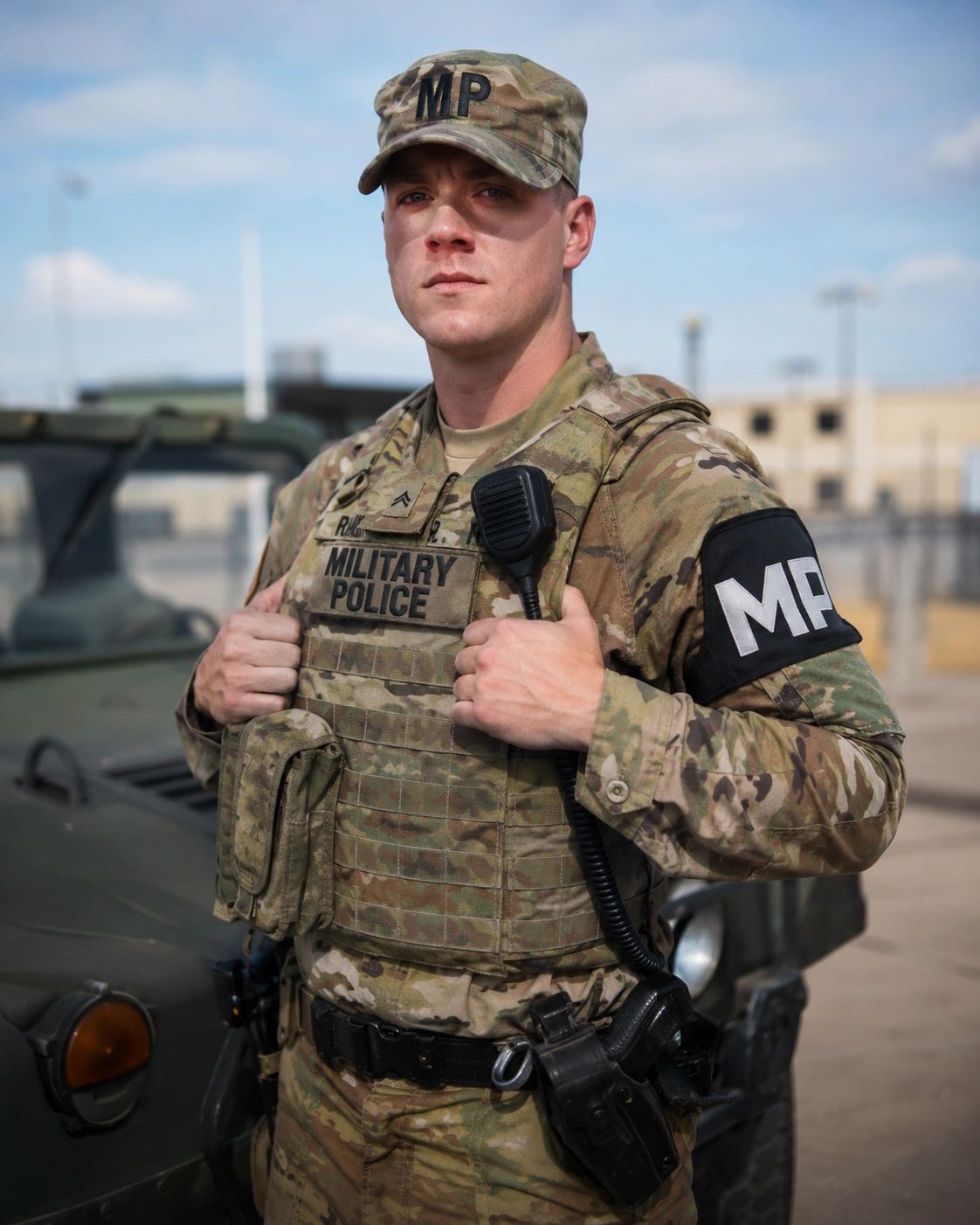
PTSD & Military Police Veterans: Non-Combat Trauma Nexus Letters | Brightview
Military police encounter death, violence, and assault response without a combat badge. How MP veterans document PTSD stressors when the trauma was not combat.

Do Veterans Have to Choose Only One Theory of Service Connection?
Direct, secondary, and aggravation are separate theories, and one claim can rest on more than one. Why each needs to be raised independently.
.png)
The VA Proposed a Mental Health Rating Decrease?!?! | Brightview
A proposed reduction is not a final decision. What the VA has to show under Brown v. Brown, and what the notice period is actually there for.

Female Sexual Arousal Disorder VA Disability: FSAD | Brightview
Female sexual arousal disorder can follow trauma, psychiatric medication, or a service-connected condition. How the VA evaluates FSAD and where SMC-K fits.

How to Pick the Correct Doctor to Write a Veteran’s Nexus Letter
Specialty match, credentials, and the difference between a reasoned medical opinion and a template letter — how to choose who writes your nexus opinion.
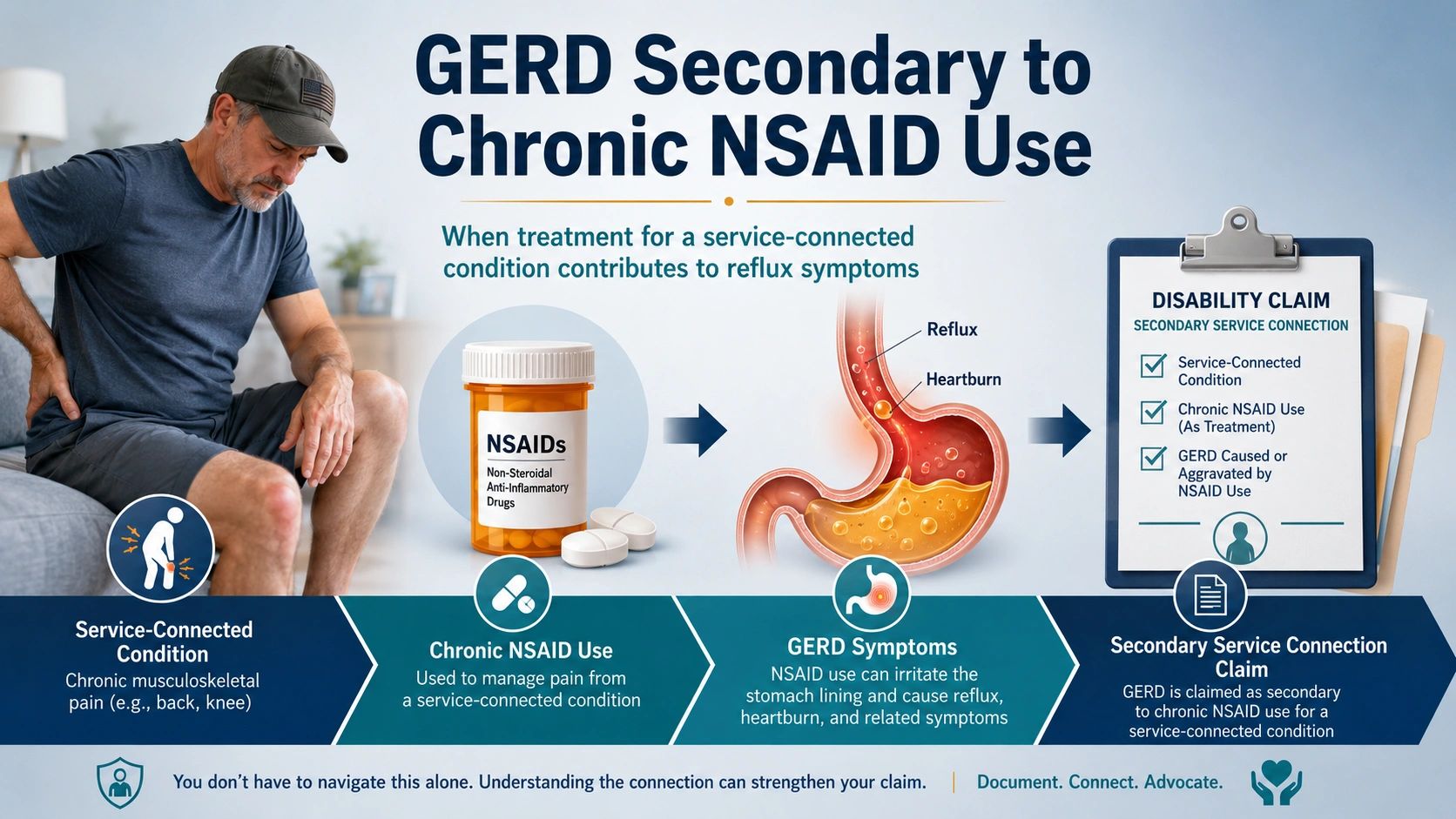
Claiming GERD Secondary to Chronic NSAID Use | Brightview
Long-term NSAID use for a service-connected orthopedic condition can irritate the stomach lining. How to frame reflux as secondary to the treatment itself.
.png)
VA CUE for Insomnia Secondary to Tinnitus
Filing for insomnia secondary to tinnitus can put more than the new claim under review. What clear and unmistakable error means, and why timing matters.
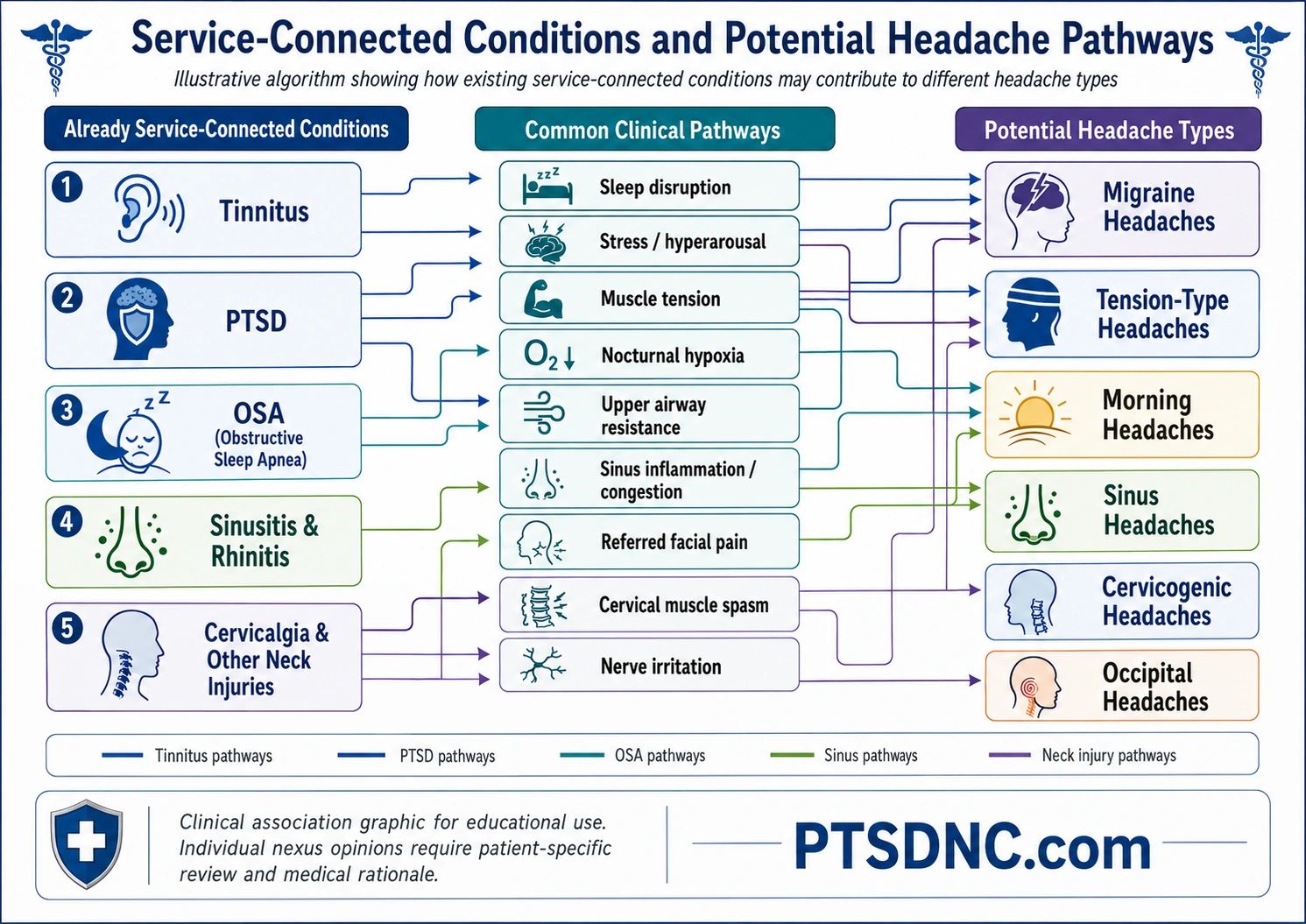
Headache Nexus Letters: Veteran Guide | Brightview
Migraine, tension, cervicogenic, sinus, and occipital headaches each connect to service differently. What every pathway requires a nexus opinion to establish.
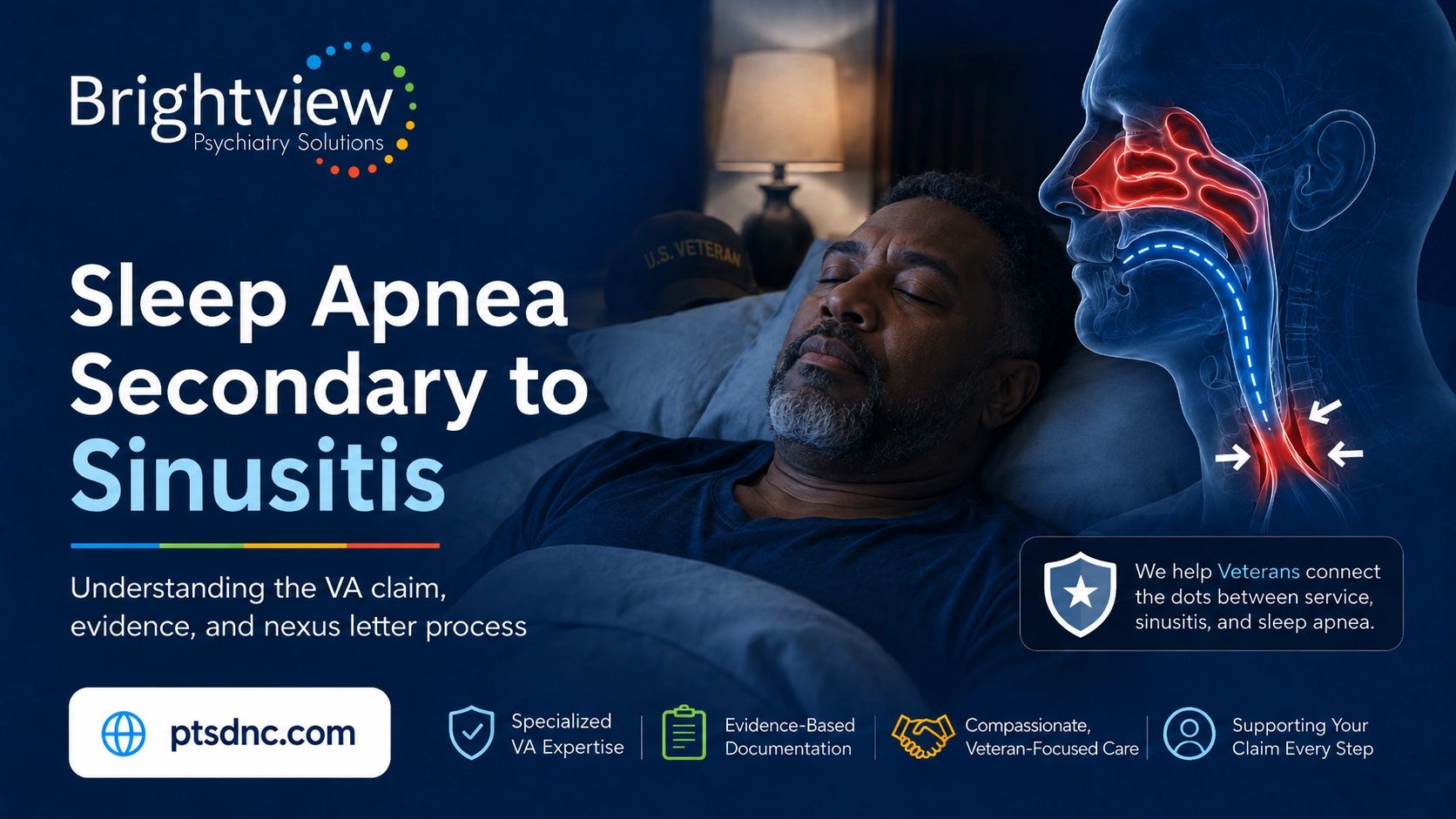
Sleep Apnea Secondary to Sinusitis | Brightview
Chronic sinusitis narrows the nasal airway and increases upper airway resistance. What a sleep apnea secondary opinion has to establish for this pathway.
.png)
PTSD vs. Other Trauma- and Stressor-Related Disorders | Brightview
A trauma history does not always produce PTSD. How adjustment disorder, acute stress disorder, and other stressor-related diagnoses differ in a VA claim.
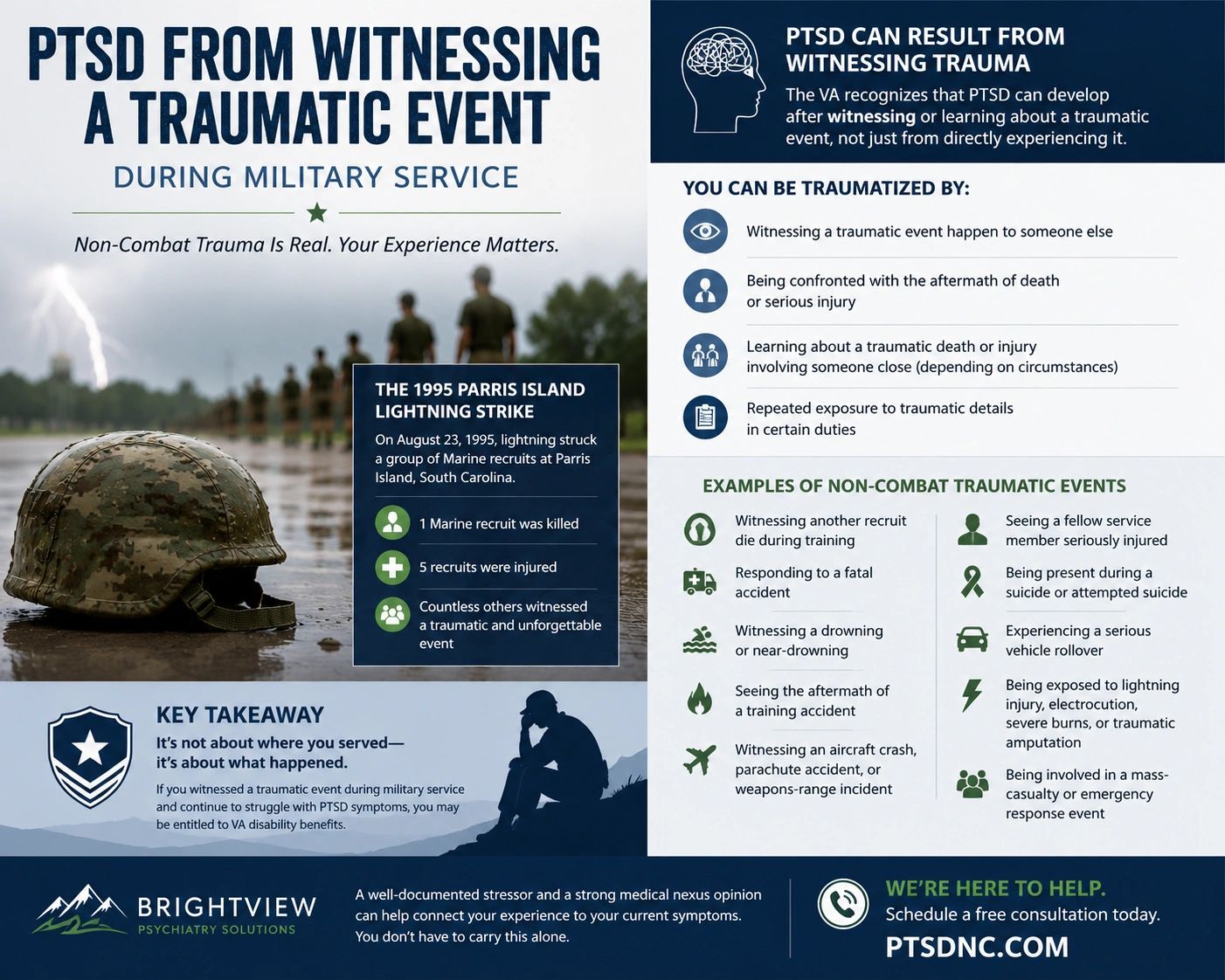
PTSD From Witnessing a Traumatic Event In Service | Brightview
You do not have to be injured for a witnessed event to meet Criterion A. How witnessed stressors are documented, using the Parris Island lightning strike.

Depression Secondary to Chronic Pain: VA Nexus Letters | Brightview
Chronic pain from a service-connected injury frequently produces depression. How the causation and aggravation theories differ, and what supports each.

Claiming Type 2 Diabetes Secondary to Sleep Apnea
Untreated sleep apnea alters glucose metabolism through intermittent hypoxia and sleep fragmentation. What a type 2 diabetes secondary opinion must establish.

Adams v. Collins Update: Obesity as an Intermediate Step | Brightview
The Federal Circuit's May 2026 decision on obesity as an intermediate step. What Adams v. Collins changes for secondary claims that run through weight gain.

Claiming Headaches Secondary to Sinusitis: Nexus Letters
Chronic sinus inflammation produces headaches distinct from migraine. How to separate the two and what a secondary headache opinion has to establish.

VA DBQ Guide: How Disability Questionnaires Work | Brightview
What a VA DBQ is, who can complete one, and how it works alongside a nexus letter to prove your VA disability claim.

Headaches in Women vs. Men | Brightview
Migraine presents differently in women, and hormonal patterns affect frequency and severity. What that means for documenting a VA headache claim.

💗 Claiming Depression Secondary to Breast Cancer | Brightview
Diagnosis, treatment, and surgical changes can each produce depression. How depression secondary to breast cancer is established under 38 CFR 3.310.

Understanding the Nexus Letter for Hypertension (HTN) | Brightview
Untreated sleep apnea raises blood pressure through repeated nocturnal oxygen desaturation. What a hypertension secondary opinion has to establish.

How to Navigate the VA Disability Claim Process: A Step-by-Step Guide | Brightview
What happens between filing and a decision — evidence gathering, the C&P examination, and the points where a claim most often stalls.

Claiming Type 2 Diabetes Secondary to Obstructive Sleep Apnea
Two diagnoses appearing together is not a nexus. What a type 2 diabetes claim secondary to OSA needs beyond the timeline, including the aggravation theory.

Anhedonia and VA Claims: When the Joy Fades
Losing the ability to enjoy anything is a core depressive symptom and a rating one. Why anhedonia is easy to miss at a C&P exam, and how to describe it.

Why Veterans with PTSD Shouldn’t Ignore Periodic Limb Movement Disorder (PLMD)
Periodic limb movement disorder fragments sleep and often goes undiagnosed. How PLMD connects to PTSD, and how the VA rates it by analogy.

Understanding Treatment Options for Obstructive Sleep Apnea | Brightview
CPAP, APAP, and BiPAP explained — what each does, what your compliance data shows, and how treatment records function as evidence in a claim.

Headaches and VA Claims: Questionnaire Data and Nexus Letters | Brightview
What the headache DBQ actually asks, how prostrating attacks are counted, and where the questionnaire and the rating criteria come apart.

Understanding the PCL-5: A Key Tool in Your PTSD Claim | Brightview
The PCL-5 is a symptom checklist, not a diagnosis. What the score does and does not establish, and how it fits alongside a nexus letter.

Describing Occupational Impairments in Your Personal Statement | Brightview
The rating criteria measure work and social function. How to describe occupational impairment in a personal statement in the terms the VA evaluates.

What Are Prostrating Headaches? A Guide for Veterans | Brightview
Prostrating means the attack stops you — not simply that the headache is severe. What the term requires, and how prostrating attacks are documented.

Women Veterans Day – Honoring Her Service, Supporting Her Healing | Brightview
Women veterans face distinct barriers in mental health care and in VA claims. Reflections on Women Veterans Day and where the record often falls short.

Headaches Secondary to Tinnitus: What Veterans Need to Know
Service-connected tinnitus can contribute to tension-type and cervicogenic headache. What a secondary headache opinion must establish under § 3.310.

Men's Mental Health Awareness Month:A Call to Action for Veterans | Brightview
Men are less likely to report psychiatric symptoms and more likely to present them as anger or physical complaints. Why that matters for veterans.

June is PTSD Awareness Month: Let’s Break the Silence
PTSD is not limited to combat veterans, and it does not always look the way people expect. What PTSD Awareness Month is for, and what still goes unsaid.

Sleep Apnea Secondary to Allergic Rhinitis: The Nexus Letter
Chronic rhinitis narrows the upper airway and can worsen obstructive sleep apnea. What a nexus opinion must establish for this secondary pathway.
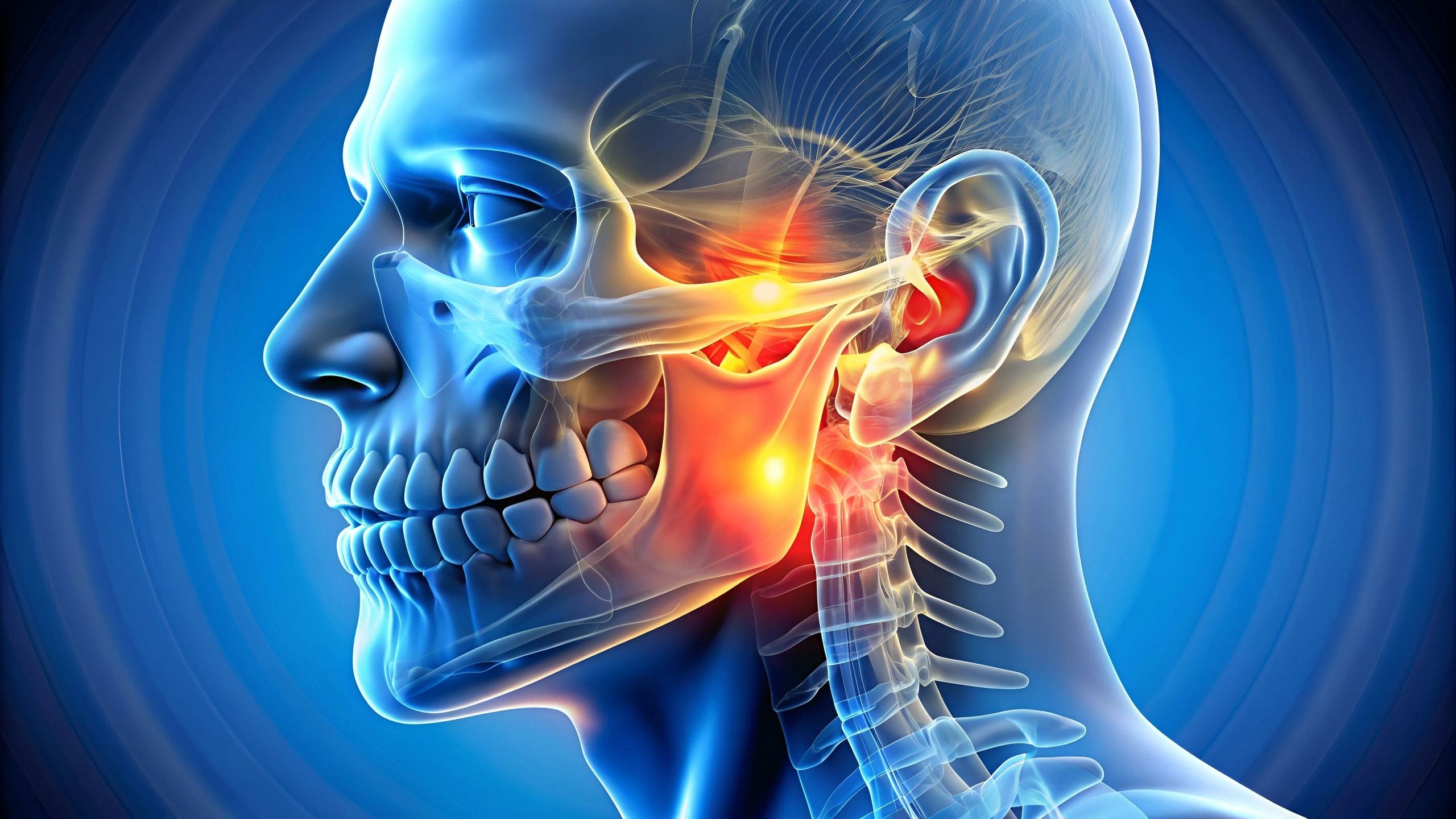
TMJ Nexus Letters Secondary to PTSD: What Veterans Need to Know | Brightview
Bruxism and jaw tension from PTSD can produce TMJ dysfunction. How the VA rates TMJ under 38 CFR 4.150, and what a secondary opinion must explain.

Sleep Apnea Nexus Letters When Obesity is Involved | Brightview
Obesity is the most common reason sleep apnea claims are denied. How VAOPGCPREC 1-2017 treats weight as an intermediate step rather than a competing cause.

How to Write a Strong Personal Statement for Your VA Claim | Brightview
A personal statement is evidence, not a formality. What to include, what to leave out, and how to describe symptoms in the terms the criteria use.

Nexus Letters for Migraine Headaches | Brightview
Migraine treatment history is claim evidence. How FDA-approved therapies, treatment failure, and prostrating attacks are documented in a VA claim.
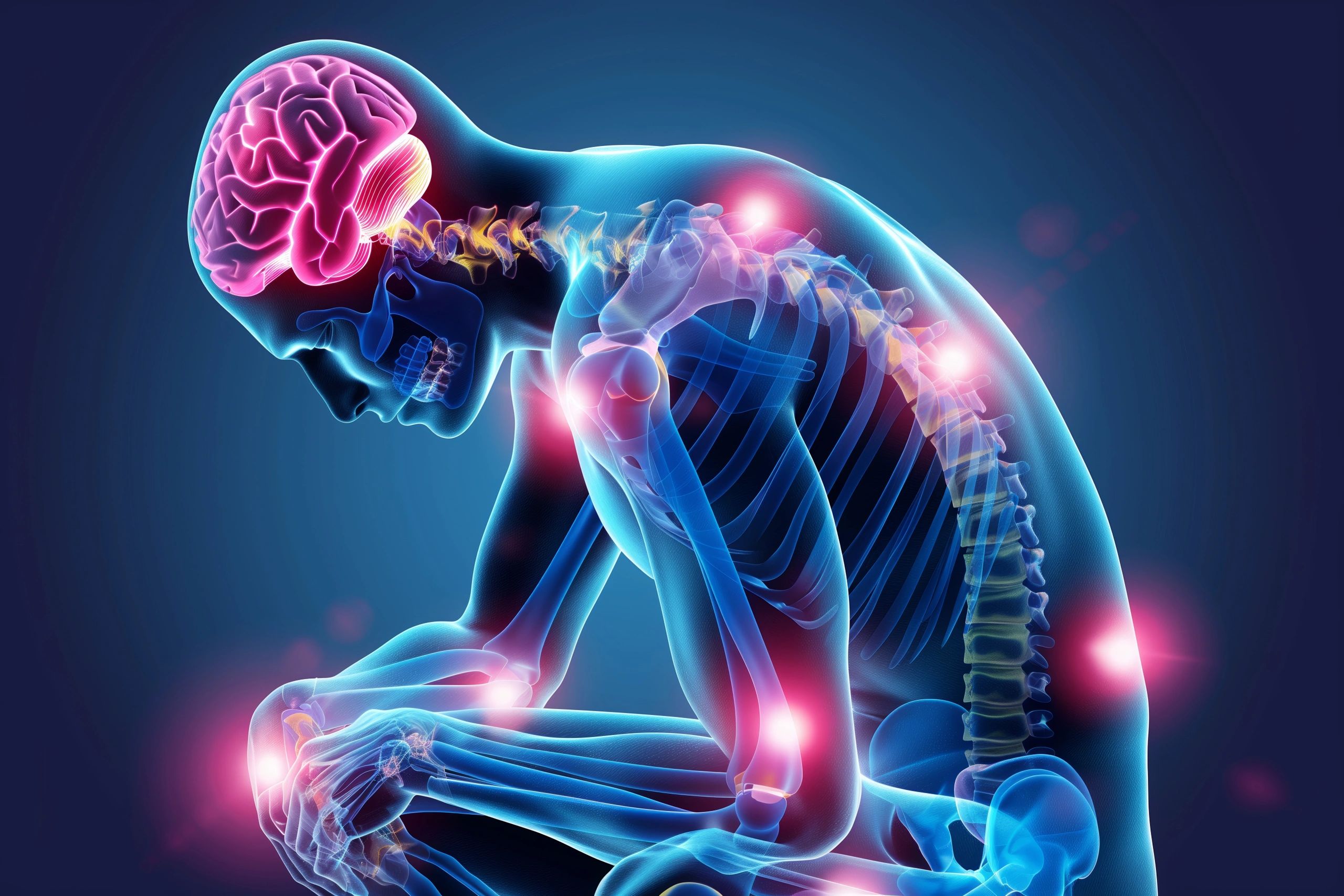
Why Are PTSD and Fibromyalgia So Common Together in Veterans?
PTSD and fibromyalgia frequently co-occur in veterans. Here is the nervous-system link, the role of sleep, the research, and how the VA connects and rates fibromyalgia.

Did the VA Rating for Sleep Apnea Change?
Nothing has changed in how the VA rates sleep apnea. Where the Take Care of America's Veterans Act and Section 108 stand, and what the proposal would do.

Breaking the Silence: Understanding Military Sexual Trauma (MST) | Brightview
What military sexual trauma covers, why so much of it was never reported, and how § 3.304(f)(5) marker evidence works when the record is silent.

💥 Yes, Hemorrhoids Can Be Service-Connected | Brightview
Hemorrhoids can be service connected directly or secondary to a condition such as IBS or medication use. How they are rated and what a claim needs.

Sleep Apnea Secondary to PTSD | Brightview
PTSD affects sleep architecture, weight, and medication use in ways that bear on sleep apnea. What this opinion must establish beyond two diagnoses.

Depression Secondary to Prostate Cancer - Nexus Letter | Brightview
Prostate cancer treatment can bring incontinence, sexual dysfunction, and depression. How a depression secondary claim is established under § 3.310.
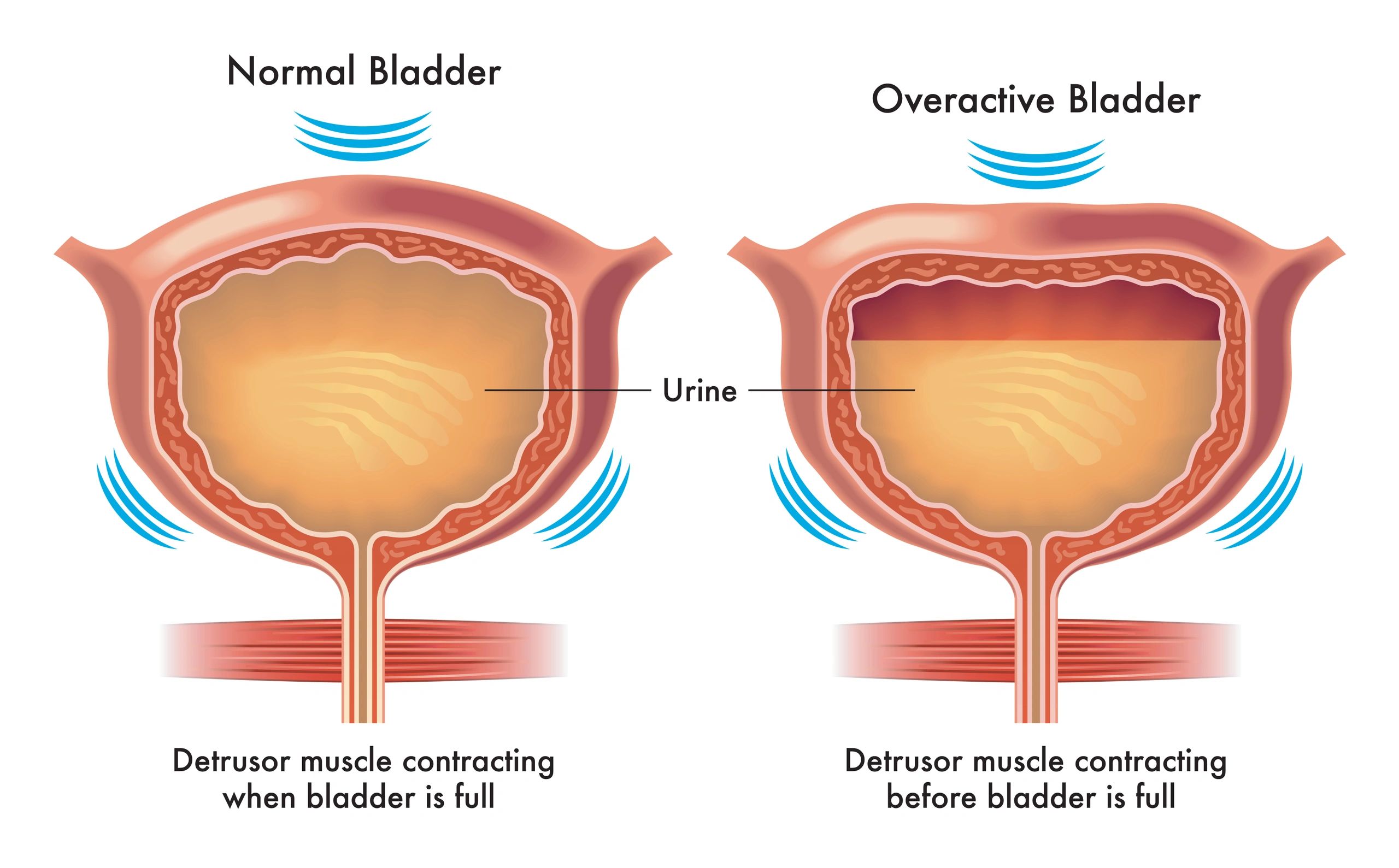
Overactive Bladder Nexus Letters for VA Claims
Overactive bladder can follow medication, a neurologic condition, or a service-connected disability. How it is filed under § 3.310 and rated under § 4.115a.

How to Get Service Connected for Sleep Apnea | Brightview
Everyone claims sleep apnea secondary to PTSD; far fewer get it granted. Where these claims actually fail, and what the evidence has to show.
Don't see your condition? Ask Brightview directly →