
When Fireworks Don't Feel Like Freedom: Coping With PTSD Today
Author: Jessica R. Allen, M.D., psychiatrist and former C&P examiner at Brightview Psychiatry Solutions, with a focus on veteran mental health. To schedule a nexus letter consultation call (984) 237-8044 or book online.
When Fireworks Don't Feel Like Freedom: Coping With PTSD on the Fourth of July
You Are Not Overreacting. Here Is What Can Actually Help.
For many military veterans, the Fourth of July is complicated.
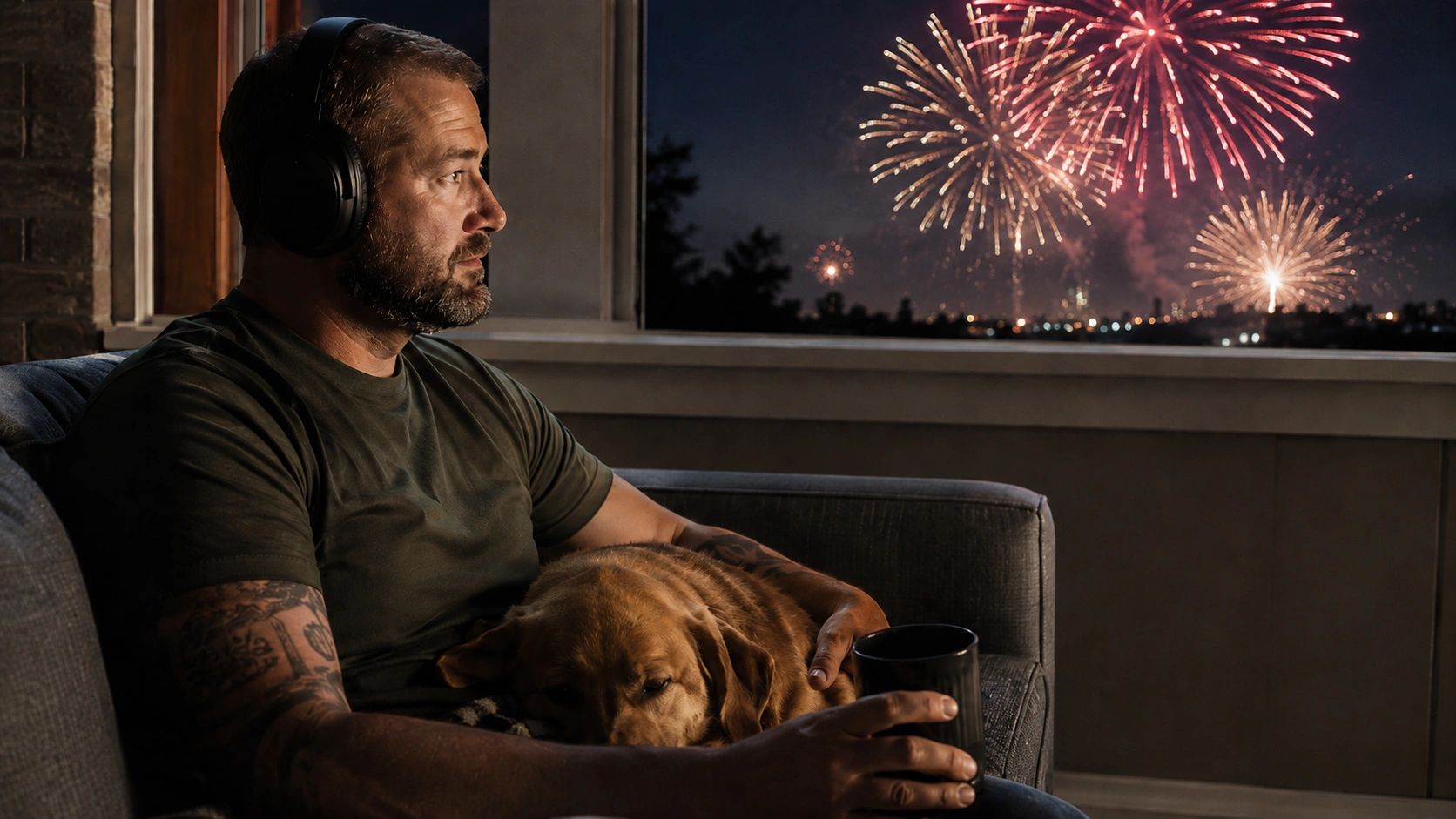
On one hand, it is a day meant to honor freedom, service, sacrifice, and country. On the other hand, fireworks can be deeply distressing for veterans living with PTSD. The sudden explosions, bright flashes, smell of smoke, crowds, and unpredictability of neighborhood fireworks can activate the nervous system before the mind has time to say, "I am safe."
You are not overreacting. Your nervous system is doing exactly what it learned to do in order to keep you alive. The problem is that it hasn't fully learned yet that the threat is gone. That is not a character flaw. It is a neurological reality.
This post is not about nexus letters or VA claims. It's just about getting through today — and maybe a few days before and after, when neighbors start early or stay late.
Here are strategies grounded in what actually helps.
Before the Fireworks Start
The Preparation That Makes the Biggest Difference
The hardest part of a PTSD trigger is often the loss of control — the sense that something is happening to you that you didn't choose and can't stop. Preparation doesn't eliminate the fireworks, but it restores some of that sense of control, which is genuinely protective.
Know your schedule. Look up when official fireworks displays in your area start and end. Many cities publish their schedules online. Knowing that the main show runs from 9:00 to 9:30 PM is easier to tolerate than an open-ended siege of unpredictable noise.
Tell someone. If you are spending July 4th with family or friends, tell at least one person how fireworks affect you before the day starts — not in the middle of it. You don't need to explain everything. You just need them to know that you may need space, that you might step away, and that it's not about them. Be specific about what actually helps. You might say: "Please don't surprise me tonight." "If I get quiet, I may just need space." "If I leave early, please don't make a big deal out of it."
Plan where you'll be. Choosing your environment in advance matters more than most people realize. A basement or interior room, a place with white noise or music already playing, a location far enough from displays that the sound is reduced — these aren't avoidance, they're reasonable accommodations you're making for yourself.
Prepare your space. If you'll be home, set it up before the fireworks start. Noise-canceling headphones charged and ready. Your preferred playlist or soundtrack queued up. A weighted blanket if that's something that helps you. A fan or air conditioner running for ambient noise. Ice water nearby. Having these things ready means you don't have to scramble when your nervous system is already activated.
Have an exit plan. If you're somewhere other than home, know before you arrive how you'll leave if you need to. Your own vehicle. A clear path to the door. A family member who knows they may need to drive you. Having an exit plan you don't use is far better than needing one and not having it.
When You Feel Triggered
Ground Yourself Before the Reaction Escalates
When a firework goes off and your body responds, the first thing that happens is physiological — your heart rate increases, your muscles tense, your breathing changes. You have a small window between that initial response and a full escalation where grounding techniques can interrupt the cycle. The goal is not to suppress what you're feeling. It's to signal to your nervous system that you are safe right now, in this moment.
Box Breathing When the body senses danger, breathing often becomes fast and shallow. Slowing it down sends a direct signal back to the nervous system that you are not in immediate threat. Breathe in for four counts. Hold for four counts. Breathe out for four counts. Hold for four counts. Repeat. This is the same technique used in military settings specifically because controlled breathing directly counteracts the physiological stress response. Do not worry about doing it perfectly. Even two or three rounds can interrupt the panic cycle.
5-4-3-2-1 Grounding When PTSD pulls you into the past, grounding skills bring your attention back to the room you are in now. Name five things you can see. Four things you can physically feel — the chair under you, the fabric of your shirt, the floor under your feet, the temperature of the air. Three things you can hear that are not fireworks. Two things you can smell. One thing you can taste. This works because it pulls your attention into the present sensory moment and out of the threat-response your nervous system has triggered. Do it slowly. Repeat if needed.
Cold Water and Strong Sensory Input Holding ice or running cold water over your wrists and face activates the dive reflex, which slows your heart rate through a direct parasympathetic nervous system response. This is not a distraction technique — it is a physiological interrupt. Strong sensory experiences generally can help remind the brain: "This is now. I am here." Chewing gum, smelling peppermint, eating something sour, or wrapping yourself in a weighted blanket can all serve this purpose.
Physical Contact With Your Environment Press your feet firmly into the floor. Press your back into the chair. Put your hands flat on a hard surface and push down. This kind of deliberate physical pressure activates proprioceptive feedback — your body's sense of where it is in space — which helps ground you in the present rather than a remembered environment.
Safe Statements When your body is reacting to fireworks as if they are a threat, a short repeated phrase can help anchor you to the present. Try: "I am safe. This is fireworks. I am home." Or: "This is loud, but it is not danger." Or: "My body is remembering. I am in the present. This will pass." This is a technique called cognitive labeling — naming what is happening measurably reduces its intensity. It may feel simple, but repetition matters. You are helping your brain separate a current sound from a past threat.
Managing the Night
Getting Through the Hours
Use sound to compete with the noise. Television, music, podcasts, fans, white noise machines, air conditioners — layering ambient sound won't make fireworks inaudible, but it changes the soundscape so explosions aren't the only thing your auditory system is processing. Some veterans find that familiar television — something they've seen before, nothing with combat or war themes — provides enough engagement to reduce hypervigilance without requiring active attention.
Noise-canceling headphones or earplugs. If you have them, this is the night to use them. Quality noise-canceling headphones reduce the peak volume of sudden sounds and take the edge off startle responses. They won't eliminate fireworks, but they change the physiological experience of them enough to matter. Earplugs work too — anything that reduces how sharply the sound arrives.
Limit alcohol if you can. It is understandable to want to take the edge off, but alcohol can make PTSD symptoms worse for many veterans. It can reduce your ability to use coping skills, increase irritability, worsen sleep, and make the next day emotionally harder. If you drink, try to pace yourself and eat beforehand. If alcohol tends to make your PTSD worse, tonight may be a good night to avoid it altogether.
Give yourself permission to not participate. You don't have to watch fireworks. You don't have to stand on the porch. You don't have to stay at the cookout just because other people are having fun. Leaving early is not rude. Taking a break is not failure. You are allowed to take care of yourself.
Pets. If you have a dog or cat who also struggles with fireworks, caring for them gives your nervous system something concrete to focus on outside of itself. Taking care of another creature can be quietly grounding.
After the Fireworks
The Adrenaline Crash and the Days Following
July 4th doesn't always end on July 4th. Neighbors shoot off fireworks for days before and after. And sometimes the hardest part is not the fireworks themselves but what comes after — the adrenaline crash, when the noise finally settles and your body feels exhausted, wired, irritable, sad, or numb all at once.
Plan a simple decompression routine: take a shower, change into comfortable clothes, drink water, watch something familiar, stretch, journal, or go to bed with calming background noise. Do not judge your body for needing time to come down.
If your sleep is disrupted tonight, be gentle with yourself tomorrow. Disrupted sleep after a triggering event is a normal response, not a sign that things are getting worse. If you're finding over the next few days that you can't return to baseline — that the activation is persisting, that sleep and appetite are still off, that you're more on edge than usual — that's worth talking to someone about.
A Note on Asking for Help
Some veterans find that the isolation of July 4th — struggling while everyone else is celebrating — makes it harder to reach out. If that's where you are tonight, the Veterans Crisis Line is available 24 hours a day. You don't have to be in crisis to call. Struggling is enough.
If you have a therapist or psychiatrist you're already working with and tonight is harder than usual, it's okay to reach out to them after the holiday. Noting what happened and how your body responded is useful clinical information, not a burden.
You Can Honor Your Service and Still Choose Quiet
Whatever tonight brings, remember: you can be patriotic and still need distance from fireworks. You can love your country and still choose to spend the evening somewhere calm. You can honor your service and still protect your peace. Both things can be true at the same time.
Tonight, your job is not to prove anything. Your job is to get through the evening safely, with as much steadiness and self-compassion as you can.
The fireworks will stop. The morning will come. And if you're reading this — you have gotten through hard things before.
Take care of yourself.
If you are in emotional distress or feel unsafe: Veterans Crisis Line — Call 988, press 1 | Text 838255 | Chat at veteranscrisisline.net
Available 24 hours a day, every day.
Written by Jessica Allen, M.D., psychiatrist at Brightview Psychiatry Solutions, with a focus on veteran mental health. Source: VA National Center for PTSD — Trauma Reminders: Fireworks (ptsd.va.gov)
Related Pages: