
Secondary Service Connection
Overactive Bladder Nexus Letters
Not sure whether your bladder symptoms can be service connected?
A free 15-minute phone consultation to review your records, your theory of service connection, and whether a nexus letter fits your case.
Free call. No obligation.
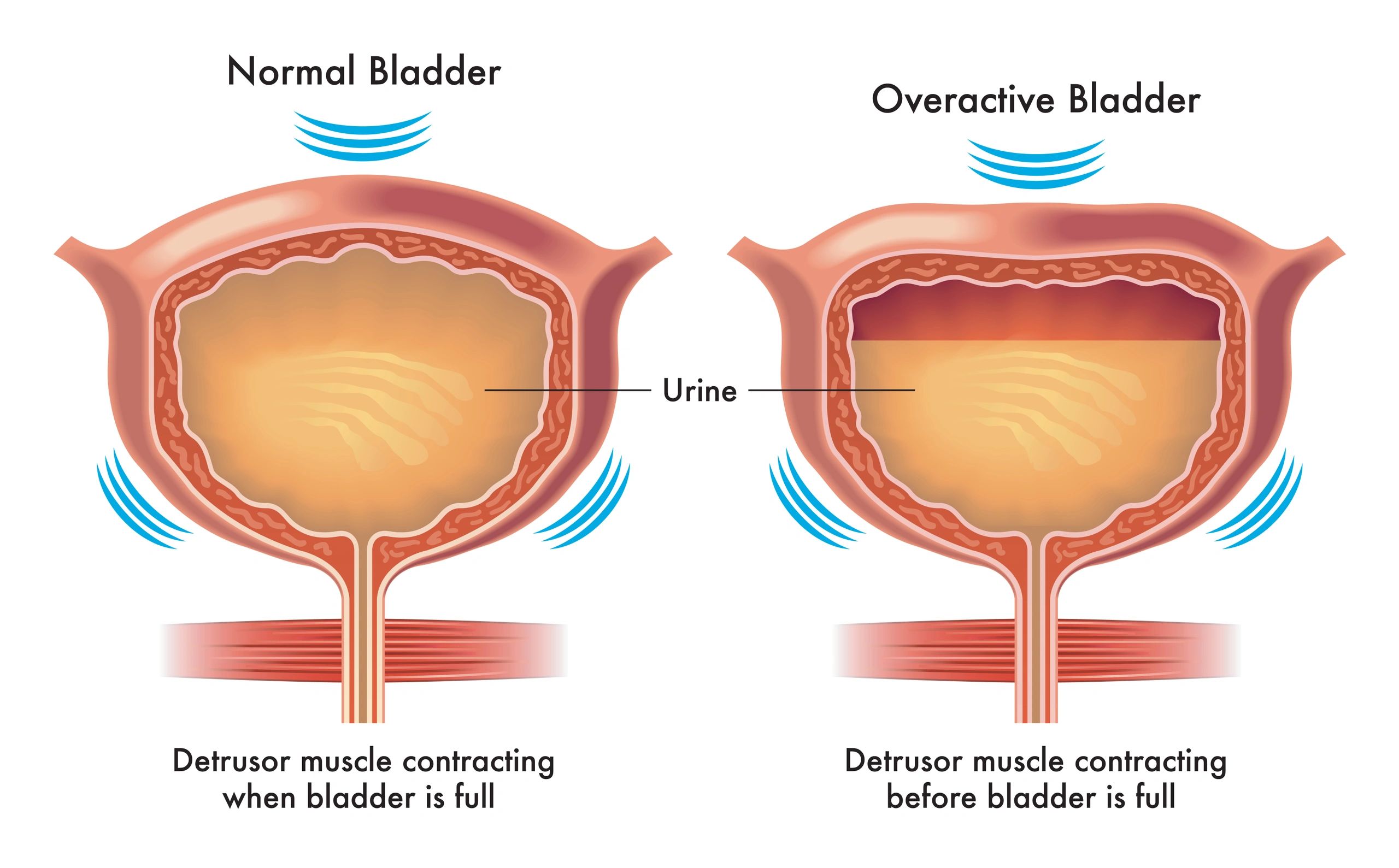
What is overactive bladder?
Overactive bladder, often abbreviated OAB, is a condition involving urinary urgency, usually with increased daytime urinary frequency and nocturia, with or without urge urinary incontinence. In plain language, a veteran with overactive bladder may feel a sudden, difficult-to-control need to urinate, may need to urinate frequently throughout the day, may wake repeatedly at night to urinate, or may experience leakage before reaching the bathroom.
For veterans, overactive bladder can be more than a medical inconvenience. It can interfere with sleep, work, travel, driving, exercise, intimacy, social activities, and emotional well-being. Many veterans begin structuring their lives around bathroom access, avoiding long trips, public events, meetings, or unfamiliar places because they fear urgency, leakage, embarrassment, or being unable to reach a restroom in time.
Overactive bladder (ICD-10: N32.81) is often abbreviated OAB. Two other terms matter: urinary frequency, which means urinating more than eight times in a 24-hour period, and nocturia, the interruption of sleep one or more times because of the need to urinate.
We write both urinary incontinence nexus letters and overactive bladder nexus letters. These conditions can be claimed secondary to PTSD and other mental health conditions, to certain medications, and to other service-connected conditions that affect the integrity of the pelvic floor. If your frequency began after starting a blood pressure medication, see our article on urinary frequency secondary to blood pressure medication.
VA ratings for urinary frequency
Urinary frequency is rated under 38 CFR § 4.115a, Ratings of the Genitourinary System — Dysfunctions. VA may rate urinary frequency at 10, 20, or 40 percent disabling, depending on the frequency and time of day. The rating criteria are as follows:
| Rating | Daytime voiding interval | Nighttime awakenings |
|---|---|---|
| 40% | More than once every hour | Five or more times per night |
| 20% | Every 1–2 hours | 3–4 times per night |
| 10% | Every 2–3 hours | At least twice per night |
How does VA rate overactive bladder?
The VA does not always use the phrase "overactive bladder" as the rating label. Instead, bladder and urinary conditions are commonly evaluated under the VA's genitourinary rating framework, including urinary frequency, voiding dysfunction, obstructed voiding, or urinary tract infection, depending on the veteran's predominant symptoms.
This distinction matters. A veteran who mainly urinates frequently may be evaluated differently than a veteran who has leakage requiring absorbent materials. A veteran who wakes five or more times per night may have a different rating picture than a veteran who primarily has urinary retention or recurrent infections.
Evidence that can help document severity includes:
- Daytime voiding interval
- Number of times the veteran wakes at night to urinate
- Whether absorbent materials are required, and how often they must be changed
- Whether the veteran has leakage, urgency, or incontinence
- Whether the condition causes sleep disruption
- Whether the condition interferes with work
- Whether the veteran must stay near a bathroom
- Whether symptoms are worsened by anxiety, trauma reminders, pain, medications, diabetes, prostate conditions, spine conditions, or other service-connected disabilities
Of the 33 million Americans who have OAB, many compensate by wearing panty liners or adult diapers. That can be demoralizing and can dominate daily life as you track the closest restroom, plan commutes, and worry about accidents. If you are already service-connected for a urinary condition and it is harming your sleep or quality of life, you may be able to claim depression as a secondary condition. See our page on urinary frequency secondary to PTSD and anxiety.
Ready to see whether a nexus letter fits your claim?
A free 15-minute phone consultation to review your records, your theory of service connection, and whether a nexus letter fits your case.
Free call. No obligation.
Can overactive bladder be service connected?
Yes. Overactive bladder may be service connected in several ways depending on the facts of the veteran's case.
Direct service connection
Direct service connection may be appropriate when urinary urgency, urinary frequency, nocturia, incontinence, bladder injury, recurrent urinary symptoms, or other genitourinary symptoms began during military service and have continued since that time. Helpful evidence may include service treatment records, deployment health records, in-service reports of urinary symptoms, medication use, line-of-duty documentation, or lay statements from the veteran or others who observed the symptoms.
Secondary service connection
Secondary service connection may be appropriate when overactive bladder is caused by an already service-connected condition — for example a spine condition, diabetes, prostate cancer residuals, PTSD, anxiety disorder, depressive disorder, or a medication side effect. You can review the full range of opinions we write on our nexus letter services page.
Aggravation
Aggravation may be appropriate when the veteran's overactive bladder was not originally caused by a service-connected condition, but a service-connected condition made the urinary symptoms worse beyond their natural progression. A veteran does not always have to prove that a service-connected condition caused overactive bladder from the beginning. In some cases, the question is whether the service-connected condition worsened urinary urgency, frequency, nocturia, or incontinence.
Overactive bladder secondary to PTSD, anxiety, depression, or MST
For some veterans, overactive bladder symptoms may be clinically relevant to trauma-related or psychiatric conditions. PTSD, anxiety, depression, military sexual trauma, and chronic stress can affect the body in ways that may worsen urinary urgency, frequency, and bladder sensitivity.
This does not mean that every case of overactive bladder is caused by PTSD or anxiety. A credible nexus letter should avoid overgeneralized claims. Instead, it should explain the veteran's specific history, diagnoses, symptoms, treatment records, and the medical rationale for why the psychiatric condition likely caused or aggravated the urinary condition. If anxiety is the driving condition, see our anxiety nexus letters page.
A psychiatric nexus letter may be especially relevant when the records show:
- PTSD related to military sexual trauma
- Anxiety-related urinary urgency
- Worsening bladder symptoms during panic, hypervigilance, nightmares, or trauma reminders
- Depression-related self-care impairment, weight changes, inactivity, or medication effects
- Sleep disruption caused by both psychiatric symptoms and nocturia
- Avoidance of public places due to fear of accidents or bathroom unavailability
- Increased urinary symptoms during periods of emotional distress
- A pattern of urinary symptoms worsening after military trauma or after worsening service-connected mental health symptoms
If your bladder symptoms are one sign that your service-connected PTSD has worsened overall, you may also want to read about an increased rating claim for PTSD.
Evidence veterans should gather for an overactive bladder claim
Use this as a working checklist. Veterans seeking service connection for overactive bladder should consider gathering:
- Urology records
- Primary care records documenting urinary frequency, urgency, leakage, nocturia, or incontinence
- Medication lists
- VA problem lists
- Urinary tract condition DBQs, if available
- Voiding diaries or bladder logs
- Personal statements
- Spouse, partner, coworker, or family statements
- Records showing use of pads, liners, absorbent materials, or protective garments
- Documentation of nighttime awakenings
- Records of prostate cancer, prostate surgery, diabetes, spine disease, neurologic disease, PTSD, anxiety, depression, or MST-related PTSD
- Prior VA denial letters
- C&P examination reports
- Any medical opinions already submitted
A bladder diary can be especially helpful because it gives the VA concrete information: how often you urinate, how often you wake at night, whether you leak, and how much the symptoms interfere with daily functioning.
Have your records together? Let's review them.
A free 15-minute phone consultation to review your records, your theory of service connection, and whether a nexus letter fits your case.
Free call. No obligation.
What should an overactive bladder nexus letter include?
- A clear diagnosis or discussion of the urinary condition
- Review of relevant medical records
- Review of the veteran's lay statements
- Discussion of service treatment records, if relevant
- Explanation of whether the claim is direct, secondary, or based on aggravation
- Identification of the service-connected condition involved
- Discussion of medical literature when appropriate
- Explanation of the mechanism connecting the conditions
- Functional impact of urinary symptoms
- Discussion of alternative risk factors
- A clear medical opinion using the VA's “at least as likely as not” standard
A weak nexus letter may simply say, "The veteran's bladder condition is related to PTSD." A strong nexus letter explains why, how, and based on what evidence.
When should a veteran consider an overactive bladder nexus letter?
- The VA denied the claim due to lack of nexus
- The veteran has a service-connected condition that may cause or aggravate urinary symptoms
- The veteran has PTSD, MST-related PTSD, anxiety, depression, prostate cancer residuals, diabetes, spine disease, or neurologic impairment
- The veteran has urinary symptoms but the VA examiner did not fully address secondary service connection
- The VA examiner addressed causation but ignored aggravation
- The veteran's symptoms are documented, but the relationship to service or to a service-connected condition has not been clearly explained
Talk with Dr. Allen about an overactive bladder nexus letter
A free 15-minute phone consultation to review your records, your theory of service connection, and whether a nexus letter fits your case.
Free call. No obligation.
Frequently asked questions about overactive bladder VA claims
Can overactive bladder be a VA disability?
Yes. Overactive bladder and related urinary symptoms may be compensable when the evidence supports service connection and functional impairment. VA may evaluate symptoms under urinary frequency, voiding dysfunction, obstructed voiding, or another applicable genitourinary rating pathway depending on the veteran's predominant symptoms.
Can overactive bladder be secondary to PTSD?
In some cases, yes. A veteran may argue that PTSD caused or aggravated urinary urgency, urinary frequency, nocturia, or incontinence, especially when the medical evidence shows worsening symptoms during hyperarousal, anxiety, panic, trauma reminders, sleep disruption, or chronic stress. The strongest claims include medical records, lay evidence, and a clear nexus opinion explaining the mechanism.
Can military sexual trauma contribute to bladder symptoms?
Military sexual trauma may be relevant when the veteran has trauma-related symptoms that affect the nervous system, pelvic tension, sleep, avoidance behavior, anxiety, or bodily hypervigilance. A trauma-informed nexus letter can explain how MST-related PTSD or anxiety may contribute to or aggravate urinary symptoms when supported by the veteran's history and records.
What evidence helps an overactive bladder VA claim?
Helpful evidence may include urology records, primary care notes, medication lists, voiding diaries, bladder logs, lay statements, documentation of pad or absorbent material use, nighttime urination frequency, C&P examination reports, prior denial letters, and records showing service-connected conditions such as PTSD, anxiety, depression, diabetes, prostate cancer residuals, spine disease, or neurologic impairment.
What if the VA denied my overactive bladder claim?
If the VA denied the claim, the next step is to review the denial letter and C&P examination. Many denials occur because the VA examiner found no nexus, ignored aggravation, overlooked lay evidence, or did not address the veteran's specific theory of secondary service connection. A rebuttal opinion or new nexus letter may help if it directly addresses the reason for denial.
Do I need a urologist or psychiatrist for an overactive bladder nexus letter?
It depends on the theory of service connection. If the claim involves prostate disease, bladder injury, neurologic impairment, or complex urologic pathology, a urologist may be appropriate. If the claim involves PTSD, MST, anxiety, depression, insomnia, chronic stress, psychiatric medication effects, or aggravation by a service-connected mental health condition, a psychiatrist may be highly relevant.
About Dr. Jessica Allen: why a psychiatrist may be the right physician for an overactive bladder nexus letter
Jessica Allen, M.D. is a physician, psychiatrist, and former VA Compensation & Pension examiner who provides independent medical opinions and nexus letters for veterans nationwide.
Although overactive bladder is a genitourinary condition, some VA claims involve important psychiatric factors — particularly when urinary urgency, frequency, nocturia, or incontinence is claimed secondary to PTSD, anxiety, depression, military sexual trauma, chronic stress, insomnia, or medication effects.
As a psychiatrist, Dr. Allen can evaluate how trauma-related symptoms, autonomic arousal, sleep disturbance, hypervigilance, and psychological distress may contribute to or aggravate urinary symptoms. Her role is not to replace a urologist, but to provide a psychiatric medical opinion when the evidence supports a relationship between a service-connected mental health condition and overactive bladder.
Her opinions are based on the veteran's diagnoses, symptom history, medical and VA records, lay evidence, relevant medical literature, competing risk factors, and the individual chronology of the claim. The goal is to provide a clear, evidence-based explanation of whether the veteran's service-connected psychiatric condition at least as likely as not caused or aggravated the urinary disorder.
Related reading
- Urinary Frequency Secondary to PTSD and Anxiety
- Urinary Frequency Secondary to Blood Pressure Medication
- PTSD Increased Rating Nexus Letters
- Anxiety Nexus Letters
- View All Nexus Letters
Sources
- 38 C.F.R. § 3.310 — Secondary service connection and aggravation.
- 38 C.F.R. § 4.115a — VA rating framework for genitourinary dysfunction, including voiding dysfunction, urinary frequency, obstructed voiding, and urinary tract infection.
- VA Urinary Tract Conditions Disability Benefits Questionnaire.
- Women Veterans Urinary Health Study — overactive bladder symptoms and mental health conditions among recently deployed women veterans.
- American Journal of Obstetrics & Gynecology — longitudinal associations between mental health conditions and overactive bladder symptoms in women veterans.
- American Urological Association / SUFU guideline materials on overactive bladder diagnosis and management.
Educational information only. This article is provided for general educational purposes and does not constitute medical advice, legal advice, or a treatment relationship. Reading it does not establish a physician–patient relationship with Dr. Allen or Brightview Psychiatry Solutions PLLC. No outcome in any VA claim is promised or implied; the VA determines service connection and assigns all disability evaluations. Veterans should consult their own treating providers regarding medical care and an accredited representative, agent, or attorney regarding claims. If you are in crisis, the Veterans Crisis Line is available 24/7: dial 988 and press 1, or text 838255.