
Denials & Examiner Reasoning
The VA blamed my civilian career for my PTSD. What do I do?
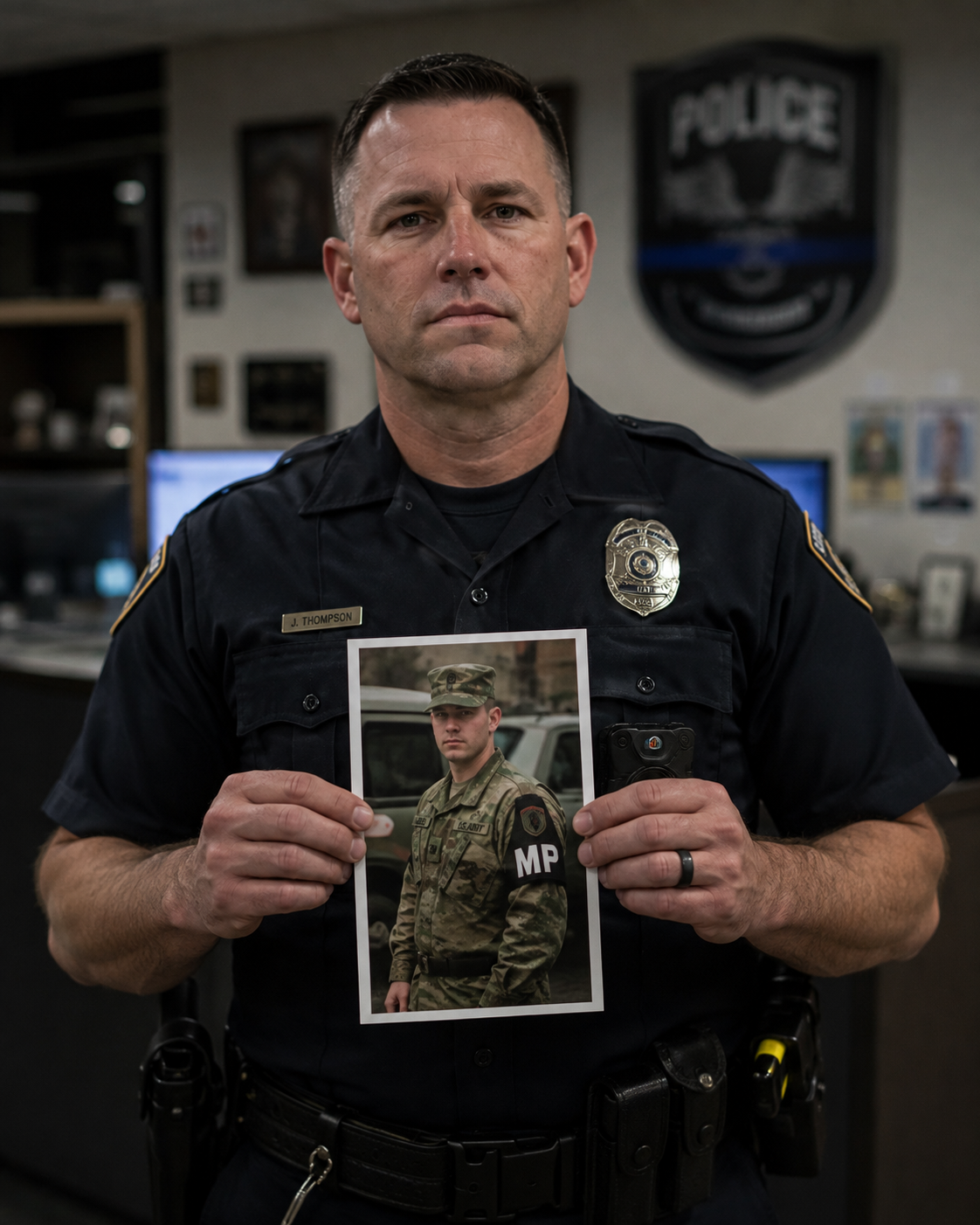
If you left service and went into police work, EMS, nursing, corrections, firefighting, or another job with trauma in it, there is a good chance a rating decision has credited that career instead of your service. Here is why that reasoning usually does not hold, and what answers it.
Quick answer
Service connection has never required your in-service trauma to be the only cause of your PTSD, or the largest one. It requires that the condition was incurred in service and that the medical link is at least as likely as not. An opinion reasoning that you had more exposure afterward, and therefore the condition is not service-related, has substituted a comparison for the actual legal test.
There is a second problem with most of these denials, and it is often the more useful one. Attribution opinions are frequently a single conclusory sentence with no reasoning attached. Under settled precedent, an opinion consisting of a conclusion without a reasoned explanation connecting the evidence to that conclusion is entitled to little or no weight — regardless of who wrote it.
Key takeaways
- Sole cause is not the standard. The question is whether the condition was incurred in service, not which career supplied more exposure. Later worsening does not undo an in-service origin.
- Inseparable means in your favor. Where contributions cannot be medically separated, the benefit of the doubt attributes them to the service-connected condition.
- A one-line opinion may be worth nothing. Reasoning, not credentials or a claims-file review, is what gives a medical opinion its weight.
- A private opinion is not automatically worth less. A private physician and a VA examiner are both weighed as expert witnesses, on the same terms.
- The timeline usually decides it. That, along with what your intrusive memories are actually about.
The denial
What does this denial actually look like?
Direct answer
It is usually one sentence in the examiner's opinion, and it compares your two careers rather than analyzing either. Once you know the shape of it, it is easy to find in your decision.
The wording varies; the structure rarely does:
The sentence to look for
“It is less likely than not that the Veteran's PTSD is related to military service. The Veteran reports significantly greater trauma exposure during his 22-year career as a municipal police officer than during his 4 years of active duty.”
Notice what it does not contain. It does not say your in-service stressors did not occur, or that they were insufficient. It does not explain medically why a later exposure means an earlier one contributed nothing. It compares two numbers and stops — applying the wrong legal standard, and doing so without the reasoning that would make it a weighable opinion at all. The rest of this article addresses both problems.
Who it happens to
Who does this happen to?
Direct answer
Anyone who used their military training in a civilian job that also involves trauma. The military trains people for exactly these careers, and the transition is the intended outcome — which is precisely what makes the denial so common.
The pattern appears across a wide range of second careers:
- Law enforcement and corrections — the most frequent, and the longest exposure histories
- Firefighting and EMS — military firefighters and medics moving into municipal departments
- Nursing and emergency medicine — corpsmen and 68W medics who went on to work trauma bays
- Security contracting — veterans who returned to the same theaters as civilians
- Dispatch, funeral service, coroner and forensic work, child protective services — all trauma-exposed, all routinely credited over military service
The military selects for these aptitudes and trains them; the civilian sector hires accordingly. The continuity that made the second career a natural fit becomes the reason the first one is discounted. One career field where this happens constantly is worked through in detail on our page for military firefighters, and the same pattern shows up for aircraft rescue and mishap response crews who went on to civilian departments.
The reasoning
Why the reasoning usually fails
Direct answer
Three problems, any one of which puts the opinion in question. Two are about the legal standard. The third is clinical.
1. Sole cause was never the test
Service connection requires that the disability was incurred in or caused by service, at a level of at least as likely as not. Nothing in that standard asks which period of a person's life supplied the most trauma. And if PTSD began in service, later civilian exposure that made it worse does not sever the connection — the question is where it started, not what happened afterward. An opinion reasoning “more exposure later, therefore not service-related” has replaced the actual question with an easier one.
2. Where the causes cannot be separated, the doubt runs your way
Under 38 C.F.R. § 3.102 and the reasoning in Mittleider v. West, 11 Vet. App. 181 (1998), where the effects of service-connected and non-service-connected contributions cannot be medically separated, the benefit of the doubt requires attributing them to the service-connected condition. So when an examiner writes that military and civilian trauma are impossible to disentangle, that is not a finding against you — it points the other way, and an opinion that makes that finding and concludes against the veteran anyway has reasoned backwards.
3. What your symptoms are about is clinical evidence
Intrusive memories and nightmares are about something. If what recurs is a convoy, a flight line, a compartment aboard ship, or a face you last saw in uniform — and not the calls of a twenty-year civilian career — that is meaningful evidence about where the injury originated. It is also the part a records review cannot supply and a brief examination rarely reaches. Nobody asked, so it is not in the file, so the decision was made without it.
Have a decision letter that says this?
Read Dr. Allen the paragraph that credits your civilian career. She can usually tell on that call whether the reasoning is answerable.
Free call. No obligation either way.
Adequacy
The opinion itself may not be adequate
Direct answer
A medical opinion earns its weight from its reasoning. An opinion that states a conclusion without a reasoned explanation connecting the evidence to it is, under settled precedent, entitled to little or no weight. Attribution denials are very often exactly that kind of opinion.
This is separate from whether the examiner reached the right answer. It is about whether the opinion is the sort of thing the VA may rely on at all.
In Nieves-Rodriguez v. Peake, 22 Vet. App. 295 (2008), the Court held that a medical examination report must contain not only clear conclusions with supporting data but also a reasoned medical explanation connecting the two, and that most of the probative value of a medical opinion comes from its reasoning. An opinion containing only data and conclusions is not entitled to weight. Notably, the Court also held that reviewing the claims file does not substitute for the absence of reasoned analysis — a thorough records review attached to a conclusory opinion does not rescue it.
Stefl v. Nicholson, 21 Vet. App. 120 (2007), puts the same requirement another way: an opinion must support its conclusion with an analysis that can be considered and weighed against contrary opinions. And under Barr v. Nicholson, 21 Vet. App. 303 (2007), once the VA undertakes to provide an examination, it is obliged to provide an adequate one.
Now look again at the sentence quoted earlier. It compares two exposure histories and announces a conclusion — no medical explanation of why the earlier exposure contributed nothing, no engagement with the in-service stressors, no discussion of symptom onset. That is a conclusion in search of a rationale, and saying so is often more effective than arguing the underlying merits.
What to check in your own exam
Does the opinion explain why, medically, the post-service exposure accounts for your condition and the in-service exposure does not? Does it address your in-service stressors at all, by name? Does it discuss when your symptoms began? If the answer to those is no, the problem may not be the conclusion — it may be that there is no opinion there to weigh.
Whose opinion counts
Your own doctor's opinion is not automatically worth less
Direct answer
No. Nieves-Rodriguez expressly rejected the assumption that a private opinion is inherently less sufficient than a VA examiner's because of claims-file access. Both are treated as expert witnesses and weighed on the same terms — primarily on the quality of their reasoning.
Many veterans assume a C&P examiner outranks an outside physician by default and decline to get an independent opinion on that basis. That is not the rule. The Court has been direct that VA examiners and private physicians offering opinions in benefits cases are expert witnesses, neither more nor less, and that weight turns on whether the expert knew the relevant history, gave a clear opinion, and supported it with sound reasoning.
So a reasoned private opinion that engages the record and addresses the in-service stressors specifically can outweigh a conclusory examination report. That is the premise of an independent medical opinion — and why medical literature alone is not enough, since general literature is not reasoning about you.
Evidence
What evidence answers this denial?
Direct answer
A timeline placing symptoms before your civilian career began is the single strongest item. Much of it already exists and simply was never gathered.
- Service treatment records noting sleep problems, irritability, alcohol use, or any mental health contact during service
- Separation physicals and post-deployment health assessments, including what you endorsed at the time
- Records from the gap between separation and the start of your civilian job — primary care, counseling, an ER visit, a divorce filing
- Statements from a spouse or partner describing what changed after service and before the second career began
- Statements from those who served with you, describing the in-service incidents and how you were afterward
- Employer, union, or workers' compensation records from the civilian career — these often document a symptom history reaching back further than the incidents being blamed for it
- Your own personal statement, explaining what you carried out of service and why you never reported it
On that last point: an absence of in-service treatment records is not evidence that nothing was wrong. Reporting psychiatric symptoms in service carried consequences for security clearances, flight status, promotion, and unit standing. A record that is silent because nobody asked and you had every reason not to volunteer should be addressed directly in the evaluation rather than left for a rating official to interpret. Our guide to writing a strong personal statement covers how to put that in your own words.
Procedurally
What should I file?
Direct answer
It depends on whether the problem was missing evidence or faulty reasoning. Those point to different lanes, and the distinction matters.
If evidence was missing — no timeline, no corroboration of the in-service stressors, no medical opinion addressing origin — a Supplemental Claim with that new evidence is generally the route. An independent medical opinion is new evidence.
If the evidence was there and the reasoning was the problem — a sole-cause test applied, an inseparability finding resolved the wrong way, a conclusory opinion relied on as though it were a reasoned one — that is an error in how the record was weighed. A rebuttal letter answers an unfavorable opinion point by point rather than simply asserting a different conclusion, which is what makes it different from a second nexus letter.
Our page on denied VA claims covers what a decision letter is telling you. For deadlines, lane selection, and appeal strategy, work with a VA-accredited attorney, claims agent, or VSO — that is a legal decision, not a medical one. The medical opinion is the part a physician supplies, and it is frequently the piece the file is missing.
Common questions
Frequently asked questions
Not sure whether your denial is answerable?
One free, confidential phone call is usually enough to find out. Dr. Allen will tell you honestly either way — including if the answer is no.
Free call. No obligation either way.
If you're struggling, support is available
Veterans Crisis Line. Dial 988, then press 1, or text 838255. Free, confidential, and available 24/7 to veterans and their loved ones. You do not need to be enrolled in VA health care.
Vet Centers. Community-based counseling for veterans and their families, including readjustment and bereavement counseling, at vetcenter.va.gov. More options are listed on our crisis resources page.
Related
Related reading
- PTSD nexus letters for military firefighters — this denial worked through for one career field
- PTSD nexus letters for aircraft rescue and mishap response
- Rebuttal letters for denied claims — answering an unfavorable opinion point by point
- Denied VA claims — what a decision letter is actually telling you
- The C&P examiner said depression, not PTSD — a related reasoning failure
- Why medical literature alone is not enough
- What is a nexus letter?
- PTSD nexus letters — combat and non-combat
Sources and authorities
- 38 C.F.R. § 3.102 — Reasonable doubt; 38 U.S.C. § 5107(b) — Benefit of the doubt.
- 38 C.F.R. § 3.303 — Principles relating to service connection; § 3.304(f) — Service connection for PTSD.
- Mittleider v. West, 11 Vet. App. 181 (1998) — attribution of symptoms where service-connected and non-service-connected effects cannot be separated.
- Nieves-Rodriguez v. Peake, 22 Vet. App. 295 (2008) — probative value of medical opinions; reasoned explanation required; private and VA opinions weighed on the same terms.
- Stefl v. Nicholson, 21 Vet. App. 120 (2007) — an opinion must support its conclusion with an analysis that can be weighed against contrary opinions.
- Barr v. Nicholson, 21 Vet. App. 303 (2007) — where VA undertakes to provide an examination, it must provide an adequate one.
- American Psychiatric Association, Diagnostic and Statistical Manual of Mental Disorders, Fifth Edition — PTSD criteria and the “with delayed expression” specifier.
Educational information only. This article is provided for general educational purposes and does not constitute medical advice, legal advice, or a treatment relationship. Reading it does not establish a physician–patient relationship with Dr. Allen or Brightview Psychiatry Solutions PLLC. No outcome in any VA claim is promised or implied; the VA determines service connection and assigns all disability evaluations. Veterans should consult their own treating providers regarding medical care and an accredited representative, agent, or attorney regarding claims. If you are in crisis, the Veterans Crisis Line is available 24/7: dial 988 and press 1, or text 838255.