
Erectile Dysfunction Nexus Letters

Erectile Dysfunction, Embarrassment, and VA Disability Claims: Why Veterans Should Talk to Their Doctor
Author: Jessica R. Allen, M.D. | Physician and Former C&P Examiner
If you would like to discuss your case with Dr. Allen, please call our office at (984) 237-8044 or schedule a free phone consultation.
Erectile Dysfunction Is Common — But Many Veterans Suffer in Silence
Erectile dysfunction, often called ED, is one of the most difficult symptoms for many men to talk about. Even veterans who can openly discuss chronic pain, combat trauma, depression, anxiety, nightmares, or sleep problems may feel embarrassed, ashamed, or uncomfortable bringing up sexual dysfunction with a physician.
That embarrassment is understandable. ED can affect confidence, relationships, intimacy, mood, and identity. Some men worry they will be judged. Others feel like they are “less of a man.” Some avoid the topic completely because they do not know what to say or because they assume nothing can be done.
But erectile dysfunction is a medical condition. It is not a character flaw. It is not a failure of masculinity. And it is not something veterans should have to silently carry alone.
For veterans, ED can also be medically connected to service-connected conditions such as PTSD, depression, anxiety, chronic pain, diabetes, hypertension, medication side effects, sleep apnea, or substance use. Physical conditions such as heart disease, high blood pressure, diabetes, obesity, and smoking can contribute to ED, and mental health concerns such as depression, anxiety, stress, and relationship problems can also interfere with sexual functioning.
Why Talking to a Doctor Matters
The first step is getting the symptom documented.
Many veterans struggle with ED for months or years before they ever tell a doctor. That delay can matter for two reasons.
First, ED may be treatable. A physician can evaluate possible causes, review medications, screen for medical risk factors, and discuss treatment options. Depending on the cause, treatment may include lifestyle changes, medication adjustments, therapy, oral medications, devices, or referral to urology. Mayo Clinic notes that evaluation may include physical exam, blood or urine testing, ultrasound in some cases, and mental health screening when depression or other mental health concerns may be contributing.
Second, documentation matters in a VA disability claim. If ED is never discussed with a healthcare provider, it may be harder to prove that the condition exists, when it began, how long it has persisted, and whether it may be connected to a service-connected condition.
A veteran does not need to give a long, detailed speech. A simple statement is enough to start the conversation:
“I’ve been having trouble getting or maintaining an erection, and it’s been affecting my confidence and relationship. I’d like to be evaluated.”
That one sentence can open the door to diagnosis, treatment, and documentation.
The Shame Around ED Can Make the Problem Worse
Embarrassment can become its own barrier to care.
A veteran may avoid intimacy because he is afraid of failure. He may withdraw from his spouse or partner. He may stop dating. He may become irritable, depressed, anxious, or ashamed. Over time, ED can become more than a physical symptom. It can become part of a cycle involving avoidance, relationship strain, low self-esteem, depression, performance anxiety, and emotional isolation.
This is especially important for veterans with PTSD, depression, anxiety, or trauma-related symptoms. PTSD can already make closeness, trust, vulnerability, and emotional safety more difficult. When ED is added to that picture, the veteran may feel even more disconnected.
Sexual dysfunction is also a recognized concern among veterans with PTSD. VA’s Office of Research and Development summarized research finding that male veterans with PTSD were significantly more likely than civilian counterparts to report erectile dysfunction or other sexual problems.
The bottom line is simple: ED is not something to hide from your doctor. It is something to evaluate.
What Veterans Can Say to Their Doctor
Many veterans avoid the conversation because they do not know how to bring it up. Here are a few simple ways to say it:
Option 1: Direct and simple “I’m having erectile dysfunction and I’d like to talk about treatment options.”
Option 2: If mental health may be involved “I’ve noticed my ED is worse when my PTSD, depression, or anxiety symptoms are worse.”
Option 3: If medication may be involved “I started noticing sexual side effects after starting or changing medication. Could we review whether my medication may be contributing?”
Option 4: If the veteran feels embarrassed “This is uncomfortable for me to talk about, but I’ve been having trouble with erections and I need help.”
Option 5: If relationship strain is present “This has been affecting my relationship and confidence, and I do not want to keep avoiding it.”
A good physician has heard this before. ED is a common medical issue. You are not shocking your doctor, and you are not the only person struggling with it.
ED Can Have Physical and Psychological Causes
Erectile dysfunction is often multifactorial, meaning more than one issue may contribute.
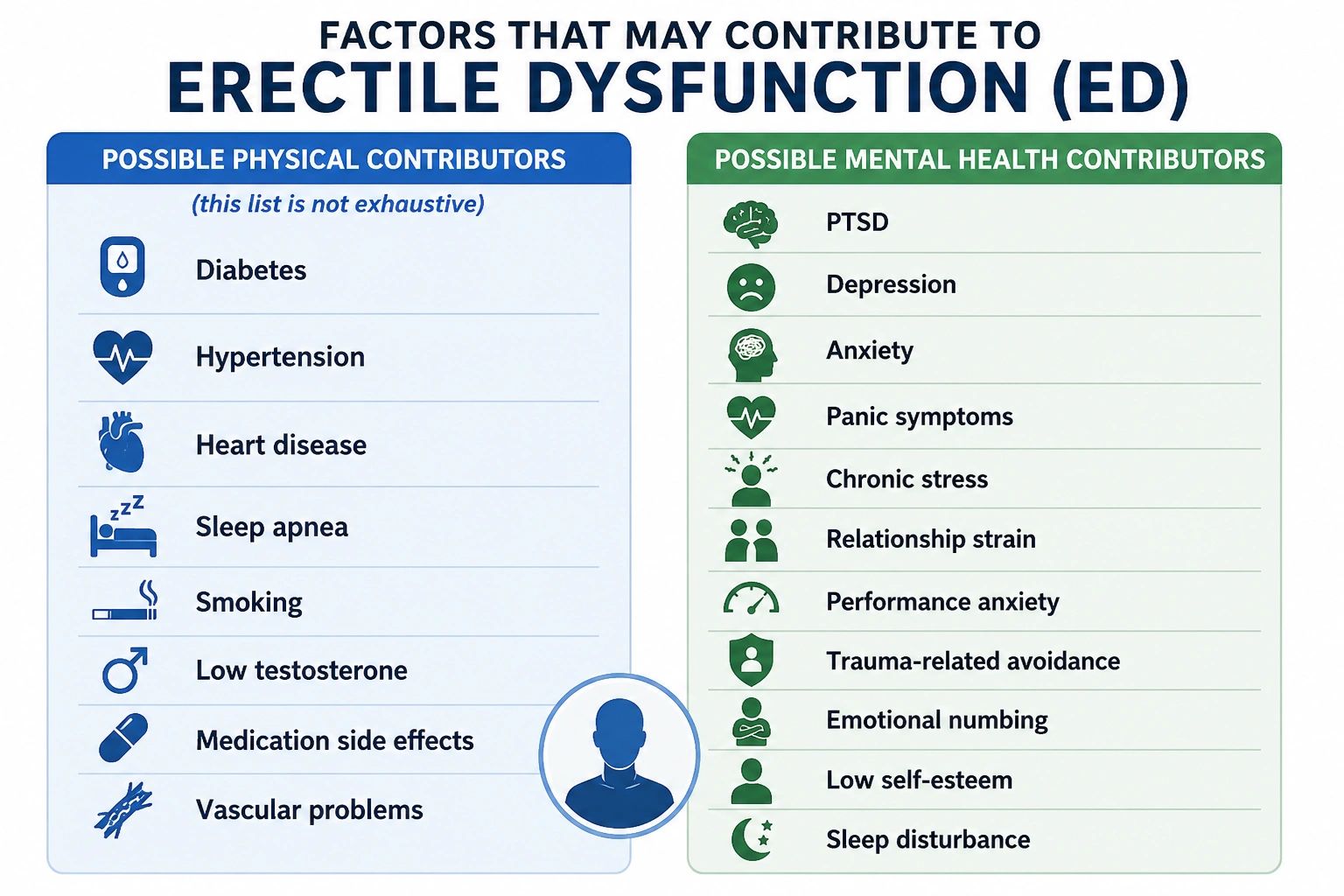
This matters because VA claims often fail when the explanation is too simplistic. A veteran’s ED may not be due to one single cause. It may be the result of overlapping physical, psychiatric, medication-related, sleep-related, and relational factors.
ED Secondary to PTSD, Depression, or Anxiety
For veterans, one common theory is that erectile dysfunction is secondary to a service-connected mental health condition.
A veteran may already be service connected for:
- PTSD
- Major Depressive Disorder
- Generalized Anxiety Disorder
- Adjustment Disorder
- Panic Disorder
- Insomnia Disorder
- Somatic Symptom Disorder
- Trauma-related disorder
- Depression due to chronic pain
- Anxiety due to tinnitus or other service-connected conditions
Mental health symptoms can affect sexual functioning in many ways. Depression can reduce libido, motivation, pleasure, and self-confidence. Anxiety can increase performance pressure and interfere with arousal. PTSD can contribute to avoidance, emotional numbness, hypervigilance, sleep disturbance, irritability, and difficulty with intimacy.
In some cases, medications used to treat mental health symptoms may also contribute to sexual dysfunction. This is another reason it is important for veterans to talk with their physician rather than silently stopping medication or assuming nothing can be done.
The Role of a Nexus Letter for Erectile Dysfunction
A nexus letter is a medical opinion that explains the connection between a veteran’s diagnosed condition and military service or a service-connected disability.
For ED, a nexus letter may be helpful when a veteran is trying to show that erectile dysfunction is secondary to a service-connected condition such as PTSD, depression, anxiety, diabetes, hypertension, sleep apnea, chronic pain, or medication used to treat a service-connected condition.
Under VA secondary service connection rules, a disability that is proximately due to, the result of, or aggravated by a service-connected disease or injury may be service connected.
In plain English, the veteran does not always have to prove that ED began during military service. If the ED developed later but was caused or aggravated by an already service-connected condition, it may still be relevant for a VA claim.
A strong erectile dysfunction nexus letter should be individualized. It should consider the veteran’s actual medical history, diagnosis, medication list, mental health symptoms, relationship history, physical risk factors, and the timing of symptom onset.
If you would like to discuss your case with Dr. Allen, please call our office at (984) 237-8044 or schedule a free phone consultation.
Why Documentation Is So Important
A nexus letter is stronger when the medical records support the diagnosis and timeline.
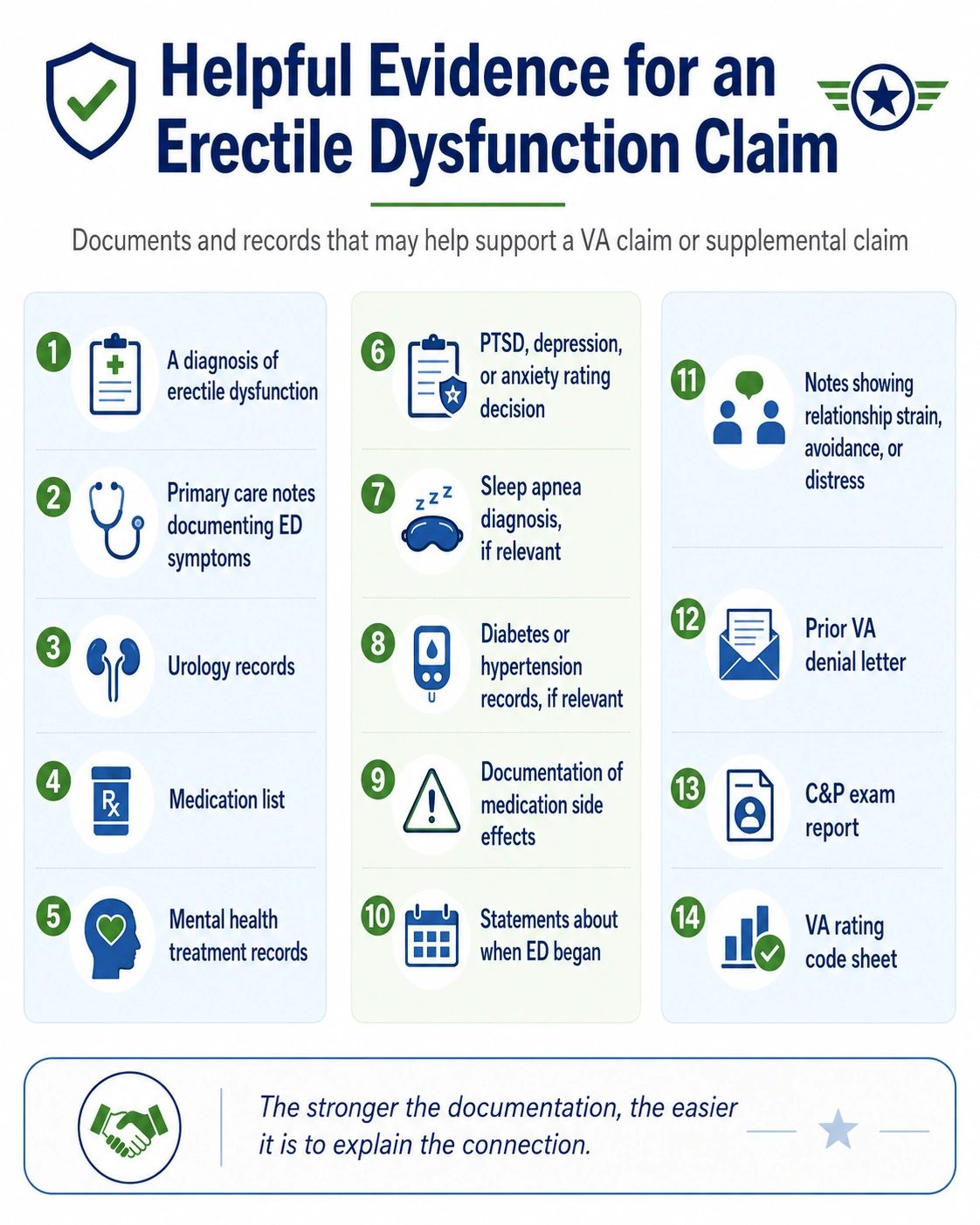
The veteran’s report matters, but medical documentation makes the claim easier to evaluate. That is why talking to a doctor is not just about benefits. It is about getting care and creating a clear medical record.
ED and Special Monthly Compensation
Veterans should also know that erectile dysfunction is often associated with special monthly compensation for loss of use of a creative organ when service connection is granted. Federal regulations provide special monthly compensation under 38 U.S.C. § 1114(k) for anatomical loss or loss of use of one or more creative organs.
This does not mean every ED claim is automatically granted. The veteran still needs evidence of the condition and a medically supportable connection to service or to a service-connected disability.
Common Reasons ED Claims Are Denied
VA may deny erectile dysfunction claims for several reasons, including:
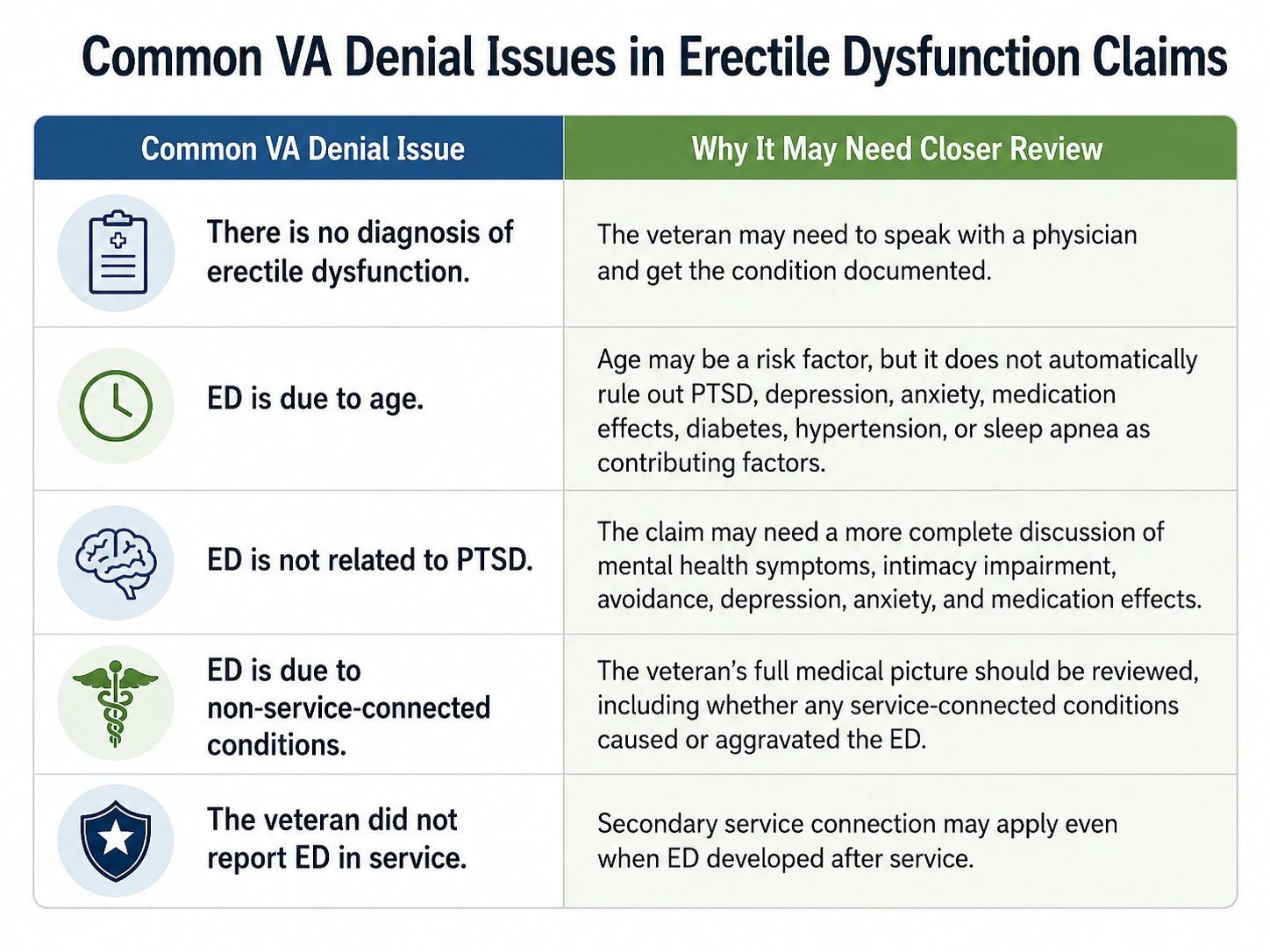
A physician-written nexus letter may help explain the relationship between ED and the service-connected condition.
A denial does not always mean the claim is impossible. It may mean the evidence was incomplete, the diagnosis was not documented, or the medical connection was not explained clearly.
Why Generic ED Nexus Letters Fall Short
Erectile dysfunction claims are personal and medically complex. A generic letter that simply says “PTSD caused ED” may not be persuasive.
A stronger opinion should review the veteran’s actual records and determine whether the connection is medically supportable. That may include evaluating:
- The onset of ED symptoms
- The timeline of PTSD, depression, or anxiety symptoms
- Medication history
- Sleep problems
- Alcohol or substance use history
- Relationship impairment
- Diabetes, hypertension, or vascular risk factors
- Chronic pain
- Weight changes
- Prior VA denial rationale
- Whether the ED was caused or aggravated by a service-connected condition
The goal is not to force a connection. The goal is to determine whether the medical evidence supports one.
Why Work With Dr. Jessica Allen for an ED Nexus Letter?
Dr. Jessica Allen is a physician and psychiatrist who has served as a former VA Compensation and Pension examiner. She has extensive experience evaluating veterans with PTSD, depression, anxiety, insomnia, chronic pain, substance use concerns, and secondary conditions that may develop as part of a broader service-connected disability picture.
For veterans with erectile dysfunction, her role is to carefully review the medical records, psychiatric history, medication list, symptom timeline, and VA denial rationale to determine whether a nexus opinion is medically supportable.
ED can be difficult to discuss, but it is a legitimate medical condition. Veterans deserve to be evaluated with dignity, privacy, and respect.
If you are a veteran struggling with erectile dysfunction and you believe it may be related to PTSD, depression, anxiety, medication side effects, sleep apnea, or another service-connected condition, consider scheduling a free phone consultation to discuss whether a nexus letter may help support your claim.
Frequently Asked Questions
Is erectile dysfunction common in veterans?
Yes. ED is common, and veterans with PTSD or other mental health conditions may be at increased risk for sexual dysfunction. VA has summarized research showing that male veterans with PTSD were significantly more likely than civilian counterparts to report erectile dysfunction or other sexual problems.
Can PTSD cause erectile dysfunction?
PTSD may contribute to ED through anxiety, hypervigilance, avoidance, emotional numbing, sleep disturbance, relationship strain, depression, and medication effects. Whether PTSD caused or aggravated ED in a specific veteran requires individualized medical review.
Can depression or anxiety cause ED?
Yes, depression, anxiety, stress, and relationship problems can interfere with sexual functioning. Physical health issues can also contribute, so evaluation by a physician is important.
Do I need a diagnosis before filing a VA claim for ED?
A diagnosis or medical documentation is very helpful. If ED has never been discussed with a physician, the veteran should consider seeking evaluation and treatment.
What should I say to my doctor?
You can keep it simple: “I’ve been having trouble getting or maintaining an erection, and I’d like to be evaluated.” If PTSD, depression, anxiety, medication, or relationship strain seems connected, tell the doctor that too.
Can ED be secondary to a service-connected mental health condition?
Potentially, yes. ED may be claimed as secondary to a service-connected condition if the evidence supports that the service-connected disability caused or aggravated the ED. VA recognizes secondary service connection for disabilities that are proximately due to, the result of, or aggravated by a service-connected disease or injury.
Does an ED nexus letter guarantee approval?
No. A nexus letter does not guarantee approval. However, a well-supported medical opinion can help explain the relationship between the veteran’s ED and a service-connected condition.
Is ED embarrassing to discuss with a doctor?
It may feel embarrassing, but physicians discuss ED regularly. You do not have to be perfectly comfortable. You only have to be honest enough to get help.
Bottom Line
Erectile dysfunction is common, treatable, and often underreported because of embarrassment. Veterans should not suffer in silence or avoid care because the topic feels uncomfortable.
Talking with a physician can help establish a diagnosis, identify possible causes, explore treatment options, and create documentation. For veterans whose ED may be related to PTSD, depression, anxiety, medication side effects, sleep apnea, chronic pain, or another service-connected condition, a nexus letter may help explain the medical connection.
ED is not a personal failure. It is a medical issue. And for many veterans, the first step toward treatment and a stronger VA claim is simply finding the courage to say, “I need help with this.”
If you would like to discuss your case with Dr. Allen, please call our office at (984) 237-8044 or schedule a free phone consultation.
Disclaimer: This blog is for general educational and informational purposes only. It is not medical advice, legal advice, or a substitute for evaluation by a qualified healthcare professional, attorney, accredited Veterans Service Officer, or VA-accredited representative. Every veteran’s medical history, VA claim, and evidence are different. If you are experiencing erectile dysfunction or other health concerns, please speak with your physician or appropriate healthcare provider for diagnosis and treatment. For questions about VA benefits, appeals, or legal rights, consult a qualified VA-accredited representative or attorney.