
PTSD nexus letters for drone and RPA operators
You watched them for weeks in high definition, you watched what happened after the strike, and then you drove home for dinner. The DD-214 shows no deployment, and that single fact is what most RPA claims turn on.
Quick answer
Can an RPA operator develop PTSD without deploying?
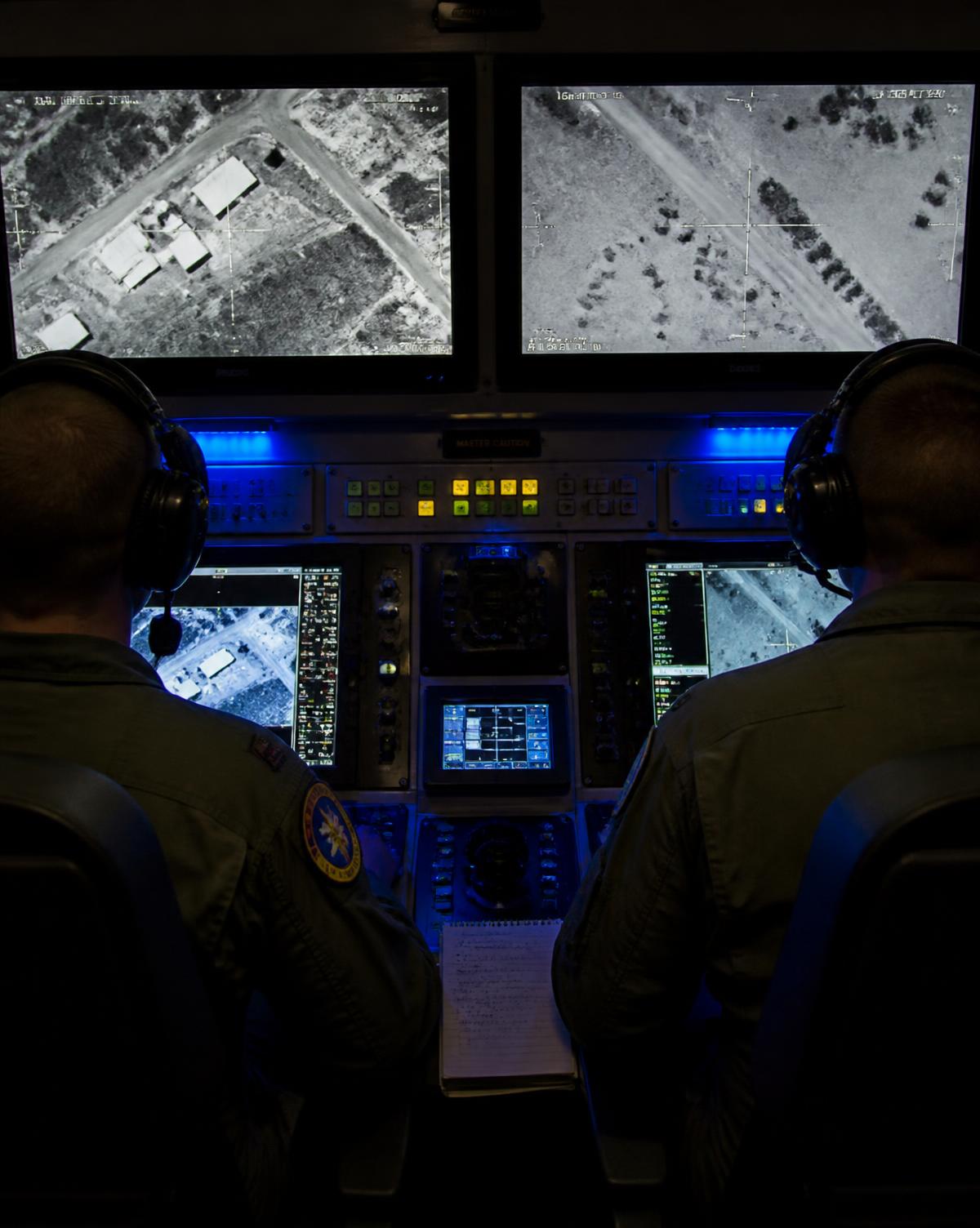
Yes, and there is published research on this specific population rather than inference from other roles. RPA pilots, sensor operators, and intelligence analysts observe targets for weeks, execute strikes, and then conduct battle damage assessment on the result at high magnification. PTSD can follow that work, and so can moral injury.
What makes these claims difficult is not the exposure. It is that the exposure leaves almost no trace an adjudicator recognizes. There is no deployment, no combat zone, no hostile fire, and no line in the record showing what appeared on the screen. The crew went to work at Creech, Holloman, Cannon, or Beale, did the mission, and went home to their families the same evening.
Service connection
Two routes to service connection — which fits your service?
You watched it happen in high definition
Strikes, aftermath, battle damage assessment, or friendly casualties. Work-related exposure of this kind is expressly within DSM-5 Criterion A.
How the criterion applies to screen exposure →Route 2 · Moral injuryA bystander died and you carry it
Guilt or shared responsibility for a noncombatant death. This is a documented predictor of symptoms in RPA crews, and it presents as guilt rather than fear.
How moral injury is assessed →These are not alternatives you have to choose between, and both frequently apply. Which conditions are service connected, and at what evaluation, is decided by VA.
RPA exposure may include
- Executing weapons strikes and observing the immediate aftermath
- Battle damage assessment at high magnification, including remains
- Weeks of pattern-of-life surveillance on the same individuals
- Witnessing the deaths of noncombatants or bystanders
- Watching friendly forces be wounded or killed while unable to intervene
- Rotating shift work, 50-plus hour weeks, and years on station
Why this duty causes injury
What makes RPA duty psychologically different?
Three features distinguish this work, and none of them are the ones people assume. The exposure is visually closer than most combat roles, not further away. It is sustained rather than episodic. And the crew returns to ordinary life within the hour.
The DSM-5 addresses screen-based exposure directly, and it matters here
DSM-5 Criterion A includes repeated or extreme exposure to aversive details of traumatic events. The manual notes that this does not apply to exposure through electronic media, pictures, or television — unless that exposure is work related. RPA crews fall squarely inside that exception. This is not a technicality to gloss over; it is the precise point on which a poorly written opinion fails and a carefully written one holds. An examiner who dismisses the exposure as “only on a screen” has misread the criterion, and the opinion should say so explicitly rather than leaving the adjudicator to work it out.
The research on this population is specific, not borrowed
In a survey of 1,084 U.S. Air Force drone operators, 4.3 percent reported symptoms at a moderate to extreme level meeting PTSD symptom criteria. Operators working more than 51 hours per week and those with more than 25 months on station were more likely to meet criteria, and 32 percent of those who did not meet criteria still reported sleep problems. Army RPA operators have been studied separately. The point for a claim is that this is a researched occupational exposure with identified risk factors, not an argument by analogy to infantry service.
Bystander deaths predict symptoms, which is a moral injury finding
A later study of 715 RPA warfighters with real-time exposure to at least one traumatic event identified two predictors that matter enormously for how a claim should be framed: the number of events in which bystanders were killed, and the operator’s sense of shared responsibility for a bystander’s death. That second predictor is not a fear response. It is guilt, and it points toward moral injury, which centers on guilt and shame rather than fear and often presents as depression. Because the presentation differs, the distinction between PTSD and other trauma- and stressor-related disorders is often decisive in these cases.
Intimacy without distance, and no transition home
Sensor operators may watch the same individuals for weeks — their routines, their children, their meals — before a strike. That familiarity is the opposite of the emotional distance the work is assumed to provide. And unlike a deployed service member, an RPA crew member has no decompression period: the shift ends, the badge comes off, and within the hour there is a school pickup or a dinner table. The absence of any boundary between the mission and ordinary life is itself reported as a source of distress.
RPA roles & codes
- Air Force RPA Pilot (18X, formerly 11U)
- Air Force RPA Sensor Operator (1U0X1)
- Air Force intelligence analysts and DCGS crews (1N-series)
- Army Unmanned Aircraft Systems Operator (15W)
- Marine Corps Unmanned Aircraft Systems Operator (7314)
- MQ-1 Predator, MQ-9 Reaper, RQ-7 Shadow, and RQ-4 Global Hawk crews
Mission qualification records, squadron assignment history, shift schedules, and hours-on-station documentation often establish the exposure better than anything in the personnel file.
The exposure is real even though the deployment record is empty. A psychiatric opinion can explain why work-related screen exposure meets the criterion, in the terms an adjudicator evaluates. See how it works.
Symptoms & impairment
What symptoms do RPA veterans report?
RPA veterans most often describe intrusive visual imagery — specific thermal or full-motion footage they cannot stop replaying — together with guilt about a particular strike. The guilt is usually harder to raise than the imagery, because saying it aloud can sound like a political statement rather than a symptom.
Distress in this population is also strongly associated with excessive hours and a perceived lack of meaning in the work, which is worth documenting alongside the traumatic exposure itself.
Evidence that helps an RPA claim
- Squadron assignment orders and mission qualification records
- Hours-on-station, shift schedules, and duty logs
- Mission or strike records, where releasable
- AFSC, MOS, and special experience identifier documentation
- Buddy statements from crew members on the same missions
- Personal statement describing specific missions and their aftermath
A common misunderstanding
Does “I was never in danger” mean the claim will fail?
This is the single most common reason RPA veterans never file. The reasoning runs that real combat veterans were shot at, that sitting in a ground control station in Nevada is not war, and that claiming anything would be an insult to people who deployed. Some carry the further belief that distress about the work implies a political objection to it, and would rather say nothing at all.
Personal danger is not a requirement. DSM-5 Criterion A is satisfied by witnessing and by repeated exposure to aversive details of traumatic events, and the manual expressly extends this to electronic media where the exposure is work related. Service connection asks whether an in-service event occurred, whether a current diagnosis exists, and whether the two are linked. RPA veterans are also sometimes told at the examination that what they have is depression rather than PTSD — what that means for a claim is worth understanding beforehand.
Tell us about your missions and your prior VA decision
We’ll explain whether a nexus letter can help your claim. A free, confidential phone call is usually enough to tell.
Who writes your opinion
Who writes your medical opinion?
Jessica R. Allen, M.D.
Licensed psychiatrist · Former VA C&P examiner
RPA claims fail most often on a misreading of a single DSM-5 note about screen-based exposure. Dr. Allen understands the psychiatric criteria for work-related exposure to aversive detail, for moral injury, and for the operational stressors documented in this population, along with the medical-legal standards VA raters evaluate: diagnosis, stressor exposure, symptom development, chronicity, impairment, and medical nexus.
- Former VA Compensation & Pension examiner
- Applies the VA “at least as likely as not” standard
- Addresses work-related screen exposure under DSM-5 Criterion A
- Writes nexus letters for veterans in all 50 states
More about Dr. Allen and the practice, or see all nexus letter services.
Educational information only. This article is provided for general educational purposes and does not constitute medical advice, legal advice, or a treatment relationship. Reading it does not establish a physician–patient relationship with Dr. Allen or Brightview Psychiatry Solutions PLLC. No outcome in any VA claim is promised or implied; the VA determines service connection and assigns all disability evaluations. Veterans should consult their own treating providers regarding medical care and an accredited representative, agent, or attorney regarding claims. If you are in crisis, the Veterans Crisis Line is available 24/7: dial 988 and press 1, or text 838255.
FAQ
Drone and RPA PTSD nexus letter questions
Can a drone operator get PTSD without ever deploying?
Does watching something on a screen count under DSM-5?
How common is PTSD among RPA operators?
Does guilt about a bystander death support a claim?
What records help establish what I saw?
Sources
Published research on this population
- Chappelle W, Goodman T, Reardon L, Thompson W. An analysis of post-traumatic stress symptoms in United States Air Force drone operators. J Anxiety Disord. 2014;28(5):480–487.
- Chappelle W, Goodman T, Reardon L, Prince L. Combat and operational risk factors for post-traumatic stress disorder symptom criteria among United States Air Force remotely piloted aircraft “drone” warfighters. J Anxiety Disord. 2019;62:86–93.
- Nelson DA, Wilson M, Kurina LM. Post-traumatic stress disorder among US Army drone operators. Aerosp Med Hum Perform. 2022;93(7):562–570.
Related pages
Related pages for RPA veterans
PTSD vs. Other Trauma Disorders
Why a trauma history does not always produce a PTSD diagnosis, and what that means for how a claim is developed.
The C&P Examiner Said Depression, Not PTSD
What that finding actually means for a claim, and why it is not the end of the road.
Depression Nexus Letters
How a psychiatrist documents a depressive disorder and connects it to service — relevant where moral injury presents as depression.
PTSD Rating Increase
When PTSD is already service connected and has worsened, the claim is an increase rather than a new service connection claim.
What to do if the VA proposes reducing your rating
The 60-day window, 38 C.F.R. § 3.344, and what an independent psychiatric evaluation has to establish.
Get Started
Not sure whether your RPA service supports a claim?
One free, confidential phone call is usually enough to find out whether a nexus letter fits. Dr. Allen will tell you honestly either way — there's no obligation.