
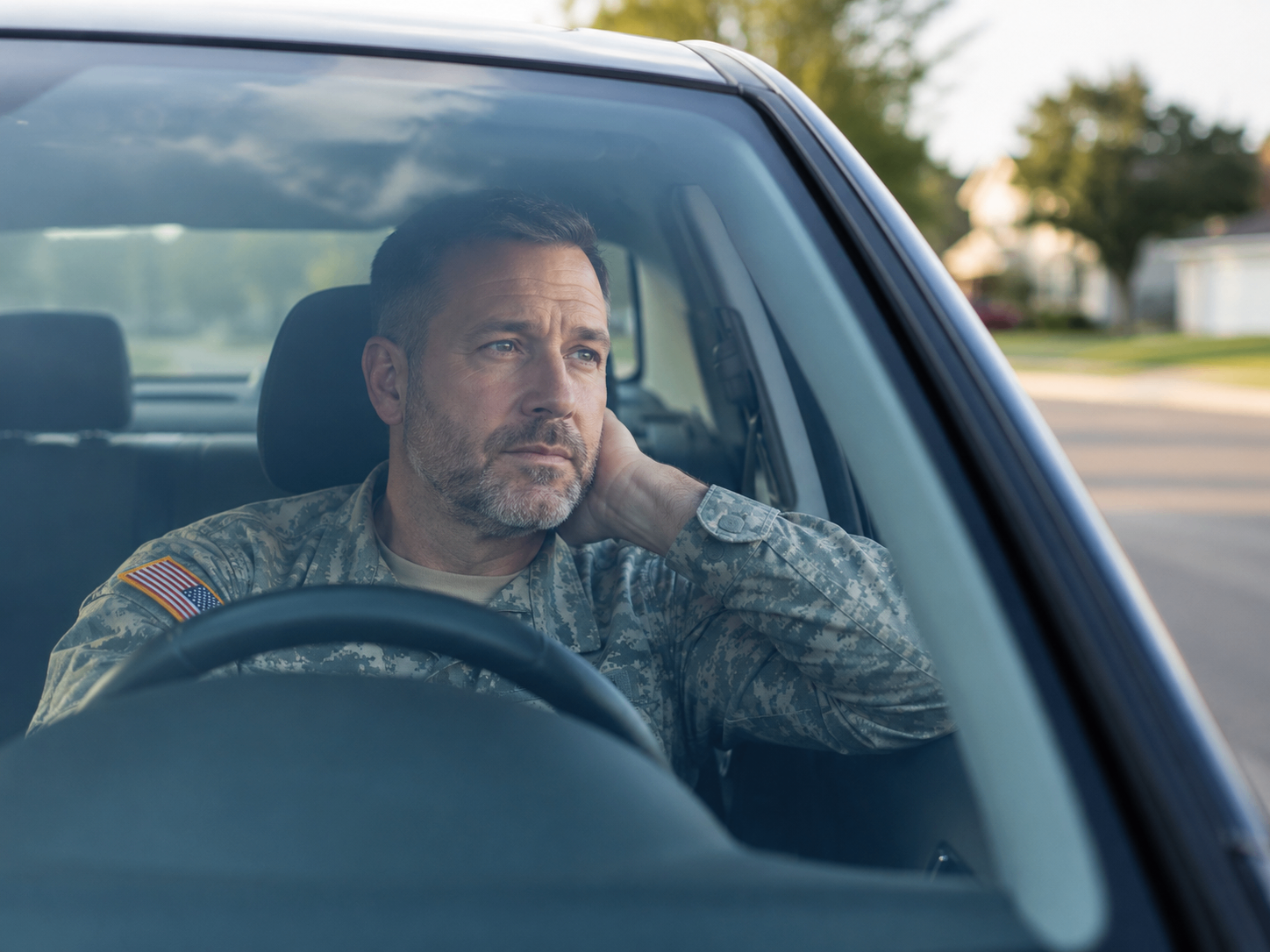
PTSD from in-service motor vehicle accidents — a real stressor.
Nearly 40 percent of serious MVA survivors develop PTSD. Convoy incidents, HMMWV rollovers, tactical driving, and off-duty crashes during active service all qualify as stressors — when the letter is written properly.
One clinic. One psychiatrist. One standard.
Brightview writes PTSD from motor vehicle accidents nexus letters the VA can't ignore.
Most PTSD from motor vehicle accidents claims aren't denied because the veteran doesn't deserve service connection — they're denied because the letter behind the claim wasn't written to the VA's evidentiary standard. Dr. Jessica Allen writes every Brightview letter personally, using the exact clinical and legal language raters are trained to look for.
Why other PTSD from motor vehicle accidents letters get denied
The letters raters throw out
- The MVA is not recognized as a qualifying Criterion A stressor by the prior examiner.
- The letter never connects the MVA to current avoidance, hyperarousal, or intrusive symptoms.
- Secondary depression, insomnia, and TBI residuals are ignored.
How Brightview wins them
What Dr. Allen puts in every PTSD from motor vehicle accidents letter
- Full DSM-5 PTSD criteria mapped to the MVA stressor.
- Clear stressor sufficiency opinion, including on- and off-duty crashes during active service.
- Secondary conditions — depression, insomnia, TBI residuals — built into the same strategy.
Don't count yourself out
You may still qualify for PTSD from motor vehicle accidents — even if you've been told you don't.
Half the veterans we help were told they had no case. They did. They just didn't have the right medical opinion in the file yet.
- The accident was 'minor' or the vehicle was drivable afterward.
- You were the driver, not the injured party.
- You were off-duty at the time — active-duty status is still what matters.
- You've been denied before because a prior examiner said the stressor 'didn't qualify.'